
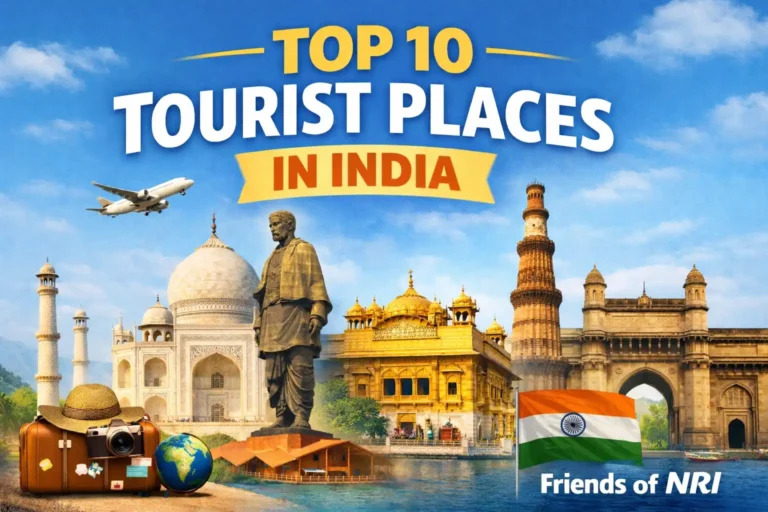
India isn’t just a country it’s an experience that stays with you long after you’ve left. Whether you’re an NRI reconnecting with your roots or an international traveler discovering India for the first time, this diverse land offers something extraordinary at every turn. From snow-capped Himalayan peaks to sun-kissed beaches, from ancient temples to bustling modern cities, India’s tourism landscape is as varied as it is captivating.
Having guided countless travellers through India’s most iconic destinations, I’ve seen firsthand how the right planning can transform a good trip into an unforgettable journey. Let me walk you through the top 10 tourist places that should be on every traveler’s India itinerary.
Top 10 Tourist Places in India
1. Jaipur, Rajasthan – The Pink City’s Royal Charm
Jaipur welcomes you with terracotta-pink buildings that glow beautifully under the desert sun. This isn’t just Instagram-worthy aesthetics-there’s real history here. The Amber Fort sits majestically on a hilltop, and you can ride an elephant up the cobblestone path (though many now prefer the jeep for ethical reasons).
Why Visit: The City Palace still houses the royal family, and you can walk through their private museums. Hawa Mahal’s honeycomb facade was designed so royal women could observe street life without being seen-a fascinating glimpse into India’s past.
Best Time: October to March. Summer temperatures can hit 45°C, which makes sightseeing genuinely exhausting.
Travel Tip: Start early morning at Amber Fort before crowds arrive. The light and sound show there in the evening is worth staying for.
2. Varanasi, Uttar Pradesh – The Spiritual Heartbeat
Varanasi is intense. The narrow lanes, the constant hum of temple bells, the Ganga Aarti at Dashashwamedh Ghat- it’s sensory overload in the best way possible. This 3,000-year-old city is where spirituality isn’t practiced, it’s lived.
Why Visit: Taking a sunrise boat ride on the Ganges is transformative. You’ll see the city wake uplocals bathing, priests performing rituals, and the golden light reflecting off the ghats. It’s chaos and calm coexisting perfectly.
Best Time: November to February. Post-monsoon clarity makes for stunning photography, and the weather is pleasant for walking tours.
Travel Tip: Hire a local guide for the gali (lane) walks. They’ll take you to hidden temples and explain the rituals you’re witnessing. Also, try the famous Banarasi paan before you leave.
3. Goa – Where India Meets the Beach
Goa is India’s favorite escape, and for good reason. Portuguese colonial architecture meets laid-back beach culture, creating a vibe that’s uniquely Goan. North Goa brings the party energy (Anjuna, Baga), while South Goa offers quieter, pristine beaches (Palolem, Agonda).
Why Visit: Beyond beaches, explore Old Goa’s UNESCO churches, take a spice plantation tour, and don’t miss the seafood. The prawns curry and fish recheado are legendary.
Best Time: November to February. Avoid monsoons (June-September) when many beach shacks close.
Travel Tip: Rent a scooter for ultimate freedom. The coastal roads are scenic, and parking at beaches is easier than in a car.
4. Agra, Uttar Pradesh – Beyond the Taj Mahal
Yes, the Taj Mahal is breathtaking. Shah Jahan’s monument to love lives up to every bit of hype. But Agra has more-the massive Agra Fort rivals any European castle, and Fatehpur Sikri (a short drive away) is a perfectly preserved Mughal ghost city.
Why Visit: The Taj changes color throughout the day. Morning gives you soft pink hues, afternoon brings stark white brilliance, and sunset bathes it in golden warmth.
Best Time: October to March. Taj Mahal is closed on Fridays.
Travel Tip: Book sunrise tickets online in advance. The morning light is magical, and crowds are thinner. Keep 3-4 hours for a proper visit-rushing the Taj is a travesty.
5. Kerala – God’s Own Country Lives Up to the Name
Kerala’s backwaters are what dreams are made of. Imagine floating in a traditional houseboat through palm-fringed canals, stopping at villages where life moves at its own pace. Add to this the hill stations of Munnar, the beaches of Kovalam, and Ayurvedic wellness retreats.
Why Visit: The houseboat experience in Alleppey is unmatched. You’ll eat freshly cooked Kerala meals on board while drifting past paddy fields and coconut groves. It’s the most relaxed you’ll ever feel.
Best Time: September to March. Monsoons (June-August) are beautiful but not ideal for backwater cruises.
Travel Tip: Book houseboats through reputable operators, not random agents at bus stands. Splurge a bit-the difference between budget and premium boats is significant.
6. Udaipur, Rajasthan – The City of Lakes
Udaipur is Rajasthan at its most romantic. The City Palace overlooks Lake Pichola, where the Lake Palace hotel appears to float on water. The evening boat ride with the palace lit up against the night sky is straight out of a fairy tale.
Why Visit: Unlike other Rajasthani cities, Udaipur has a softer vibe. The lakes cool the desert air, and there’s an artistic soul to the city-miniature paintings, traditional music, and lakeside cafes.
Best Time: September to March. The lakes are fuller post-monsoon, making the scenery more dramatic.
Travel Tip: Stay in the old city area (near Jagdish Temple) for walkable access to main attractions. The rooftop restaurants here have stunning palace views.
7. Rishikesh, Uttarakhand – Adventure Meets Spirituality
Rishikesh sits at the Himalayan foothills where the Ganges is still turquoise and rushing. It’s yoga capital meets adventure sports hub-you can meditate at an ashram in the morning and go whitewater rafting in the afternoon.
Why Visit: The Ganga Aarti at Parmarth Niketan ashram is deeply moving. For adventure seekers, the rapids here are thrilling but safe enough for beginners. The iconic Laxman Jhula suspension bridge offers panoramic valley views.
Best Time: February to May and September to November. Avoid monsoon season when river activities are suspended.
Travel Tip: If you’re into yoga, book a multi-day residential course at one of the ashrams. The immersive experience is more valuable than drop-in classes.
8. Hampi, Karnataka – Ancient Ruins with Unreal Landscapes
Hampi doesn’t look real. Giant boulders balance impossibly, ancient temples rise from banana plantations, and medieval ruins sprawl across 26 square kilometers. This UNESCO site was once the capital of the Vijayanagara Empire-one of the richest cities in the world.
Why Visit: The Vittala Temple’s stone chariot and musical pillars are architectural marvels. Climbing Matanga Hill for sunrise, with the ruins spread below you, is pure magic.
Best Time: October to February. Summer heat (March-May) makes exploration difficult.
Travel Tip: Rent a bicycle or scooter. The monuments are spread out, and cycling through paddy fields and boulder landscapes is part of the experience.
9. Ladakh – The Land of High Passes
Ladakh isn’t for the faint-hearted-literally. At 11,000+ feet elevation, you need time to acclimatize. But the payoff is enormous: monasteries perched on cliffsides, impossibly blue Pangong Lake, and roads that feel like they’re touching the sky.
Why Visit: The landscape is otherworldly-barren mountains in shades of brown, gold, and red, with brilliant prayer flags adding splashes of color. Nubra Valley’s sand dunes with double-humped camels feel like a desert dream.
Best Time: May to September. Roads are mostly closed in winter due to heavy snow.
Travel Tip: Spend 2-3 days in Leh before heading to higher altitudes. Altitude sickness is real. Carry prescribed altitude medication and stay hydrated.
10. Mumbai, Maharashtra – India’s City That Never Sleeps
Mumbai is energy personified. The Gateway of India stands witness to history, Marine Drive curves along the Arabian Sea, and the streets buzz with ambition. From Bollywood glamour to Dharavi’s entrepreneurial spirit, this city shows you every shade of India.
Why Visit: The street food alone justifies the trip-vada pav, pav bhaji, bhel puri from Chowpatty Beach. Take a heritage walk through Fort area’s colonial buildings, visit the Prince of Wales Museum, and experience a locals-only train ride (during non-peak hours!).
Best Time: November to February. Monsoons (June-September) are romantic but can disrupt plans.
Travel Tip: Use the local train system during non-peak hours to truly experience Mumbai’s lifeline. The Bandra-Worli Sea Link drive at sunset is spectacular.
Planning Your India Journey with Peace of Mind
Make Your Spiritual Journey Truly Meaningful
India’s temples, ghats, and pilgrimage sites offer profound experiences- but coordinating rituals, booking priests, and navigating temple protocols can be overwhelming, especially if you’re unfamiliar with local customs.
Friends of NRI specializes in organizing spiritual and cultural experiences for NRIs and Indians exclusively. Whether you need puja arrangements at Varanasi’s ghats, temple darshan coordination in South India, or help organising religious ceremonies during your visit, we handle every detail so you can focus on the spiritual experience.
Traveling with elderly parents? We ensure comfortable arrangements, wheelchair accessibility at temple sites, and medical support on standby- so your family pilgrimage remains stress-free and sacred.
Planning a spiritual journey to India? Let Friends of NRI be your cultural and spiritual concierge. [Connect with us today]
Frequently Asked Questions
Q: Is India safe for solo travelers?
India is generally safe if you take standard precautions. Stay in reputable accommodations, avoid isolated areas at night, and trust your instincts. Women travelers should dress modestly in religious sites and be extra cautious in crowded places.
Q: What’s the best way to travel between cities?
Domestic flights are affordable and save time for long distances. Trains offer an authentic experience-book AC 2-tier or 3-tier for comfort. For short distances, private cabs or apps like Ola/ Uber work well.
Q: Do I need vaccinations before visiting India?
Consult your doctor, but typically recommended vaccines include Hepatitis A, Typhoid, and routine immunizations. Carry basic medicines for stomach issues and always drink bottled water.
Q: How many days do I need to cover these destinations?
Realistically, 2-3 weeks for a well-paced trip covering 5-6 destinations. Rushing through India means missing its essence. Quality over quantity always wins.
Q: What should I pack for an India trip?
Light, modest clothing (covering shoulders and knees for temples), comfortable walking shoes, sunscreen, a good camera, and a scarf (useful for sun, dust, and temple visits). A power bank is essential-you’ll be taking tons of photos!