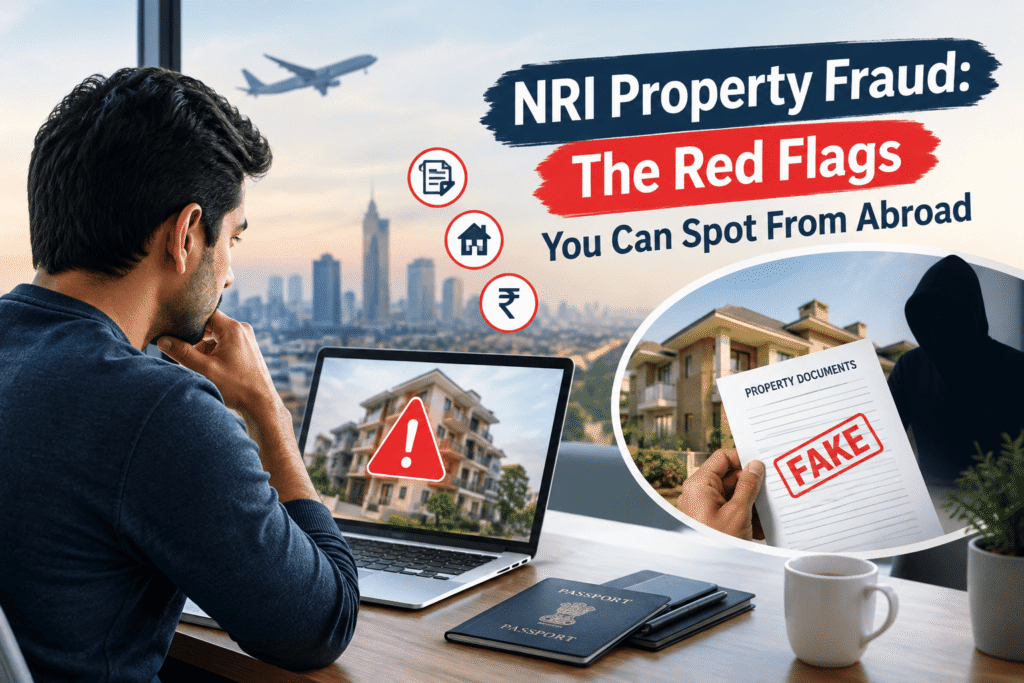

Inheriting a property in India can bring mixed feelings for an NRI. It may be a family home, land, apartment, or commercial property left by parents or other family members. While the property can be valuable, managing it from another country is not always easy.
Many NRIs are unsure about what they should do first after inheriting property in India. Should they transfer the property into their name? Should they sell it, rent it out, or keep it? What documents are needed? What happens if other family members also have a claim?
The first step should not be selling or renting the property. It is important to understand your ownership, collect the right documents, and check the property’s legal and financial position.
1. Collect All Property and Family Documents
The first thing an NRI should do is collect all documents related to the inherited property.
Depending on the situation, these may include:
- Original sale deed or title deed
- Previous property documents
- Will, if one was left
- Death certificate of the previous owner
- Legal heir or succession documents, where applicable
- Property tax receipts
- Mutation records
- Encumbrance-related records
- Society or apartment documents
- Electricity and water bills
- Loan or mortgage documents, if any
Do not rely only on photocopies or information provided by relatives. If the original documents are unavailable, find out where they are and obtain certified copies or other available records.
This step helps you understand what property you have inherited and whether there are any existing issues connected with it.
2. Find Out Who Has Legal Rights in the Property
Inheritance can become complicated when more than one family member is involved.
If the deceased person left a valid Will, the distribution of the property may generally depend on its terms, subject to applicable law and the circumstances of the case. If there is no Will, succession can depend on the personal law applicable to the deceased and the family situation.
For this reason, an NRI should not assume that being a son, daughter, spouse, or another relative automatically means having complete ownership of the property.
If several legal heirs are involved, check the ownership position before making any decision about selling, renting, transferring, or developing the property.
For complicated inheritance matters, taking advice from a qualified property or succession lawyer in India can help avoid costly mistakes.
3. Check the Property Records
Once you understand the family and inheritance position, check the official property records.
The exact process can differ between states and property types. You may need to check land records, municipal records, registration records, society records, or other local records.
Look for issues such as:
- Pending property disputes
- Existing loans or mortgages
- Unpaid property taxes
- Multiple ownership claims
- Incorrect names in records
- Unauthorised construction
- Existing tenancy
- Pending court cases
This is particularly important for NRIs because a property may have been unused or managed by relatives for several years.
A proper document and record check can give you a much clearer picture before you decide what to do next.
4. Get the Property Transferred or Mutated Properly
After inheritance, the property records may still show the deceased owner’s name.
Depending on the property and state, the legal heirs may need to complete the appropriate mutation or transfer process with the relevant authority.
Mutation is mainly a record-keeping process and should not be treated as the same thing as proving title in every situation. The underlying ownership documents and succession documents remain important.
If you are living abroad, you can arrange for a trusted person in India to assist with the process where legally permitted. In some cases, an NRI may also use a properly executed Power of Attorney for specific property-related work.
The Power of Attorney should be prepared carefully. Giving broad authority to another person without understanding what they can do on your behalf can create unnecessary risks.
5. Visit or Professionally Inspect the Property
If possible, visit the property yourself. If you cannot travel to India, arrange for someone trustworthy to inspect it on your behalf.
The inspection should cover:
- Current condition of the property
- Occupancy status
- Maintenance requirements
- Any unauthorised occupants
- Damage or structural concerns
- Utility connections
- Neighbour or society-related issues
- Property boundaries, especially for land
An NRI may live thousands of kilometres away from the property. This distance can make small problems difficult to notice until they become expensive.
This is where professional Property Management Services in India for nri can be useful for owners who need regular property inspection, maintenance coordination, tenant support, and other on-ground assistance.
6. Check Whether Anyone Is Already Using the Property
An inherited property may not always be vacant.
A tenant, relative, caretaker, former employee, or another person may already be living in or using the property.
Before asking anyone to leave or signing a new rental agreement, understand the existing arrangement and applicable local rules.
Do not take sudden action based only on verbal information. Keep copies of existing agreements, rent receipts, correspondence, and other relevant records.
If there is a disagreement over possession, it is better to get proper legal advice instead of trying to handle the matter personally from abroad.
7. Understand the Tax and Financial Side
Inherited property can also involve tax and financial questions.
In general, receiving property through inheritance is different from purchasing a property. However, future transactions such as selling or renting the property can have tax consequences.
If you decide to sell the inherited property, the tax treatment can depend on factors such as the date and cost of acquisition of the previous owner, the applicable rules, and the nature of the transaction.
If you rent the property, rental income and applicable tax compliance need to be considered separately.
NRIs should therefore speak with a qualified tax professional before selling or renting an inherited property rather than relying on assumptions or old information.
8. Decide What You Want to Do With the Property
Once the documents, ownership, records, possession, and financial position are clear, you can decide what makes sense for your situation.
You may choose to:
- Keep the property for family use
- Rent it out
- Sell it
- Renovate it
- Transfer your share, where legally possible
- Continue holding it as a long-term asset
There is no single option that works for every NRI.
The right decision depends on the property’s location, condition, market value, family requirements, legal position, maintenance costs, and your long-term plans.
9. Do Not Depend Entirely on Relatives to Manage the Property
Many NRIs initially ask a family member to take care of their inherited property. This can work when there is complete trust and regular communication.
However, long-term property management can involve many tasks, including maintenance, tenant communication, inspections, rent collection, documentation, and dealing with local service providers.
If you need wider support beyond property-related work, you can also explore NRI Services in India that help NRIs manage different practical requirements while staying abroad.
The key is to keep proper records and make sure you remain informed about what is happening with your property.
10. Keep a Complete Property File
After completing the initial process, create one organised file containing all important property documents.
Keep copies of:
- Ownership documents
- Inheritance documents
- Tax records
- Property bills
- Agreements
- Legal correspondence
- Maintenance records
- Bank and rent records
- Details of authorised representatives
Digital copies can also be useful, especially when you live outside India. However, important original documents should be stored safely.
Final Thoughts
Inherited property in India can become a valuable family asset, but an NRI should avoid making quick decisions without first understanding the ownership and legal position.
Start with the documents. Confirm who has rights in the property. Check the official records, understand the property’s current condition, and identify any loans, disputes, taxes, tenants, or other issues.
Only after these basic steps should you decide whether to keep, rent, maintain, or sell the property.
For NRIs living abroad, having reliable people on the ground in India can make property ownership much easier. Proper documentation, professional advice, and regular property oversight can help protect the property and reduce problems in the future.