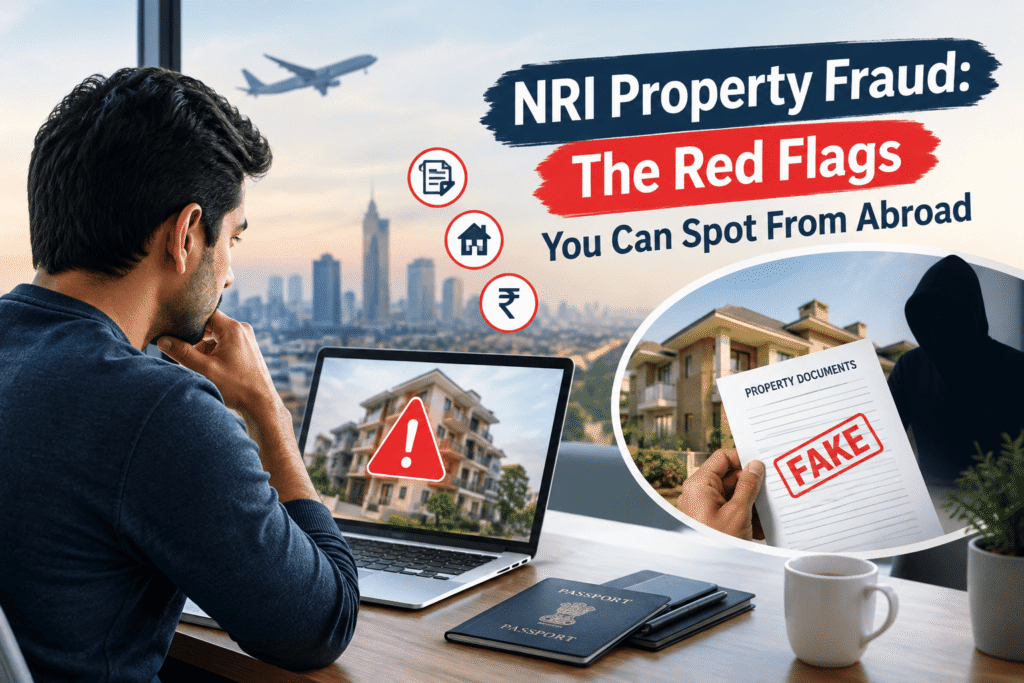

Ancestral property can become complicated when several family members claim rights over the same house, land, or other property in India. The situation becomes even more difficult when some family members are living abroad and cannot visit India regularly.
For NRIs, an ancestral property dispute is not only about ownership. It can also involve old property records, inheritance documents, family relationships, wills, succession rules, and disagreements between relatives.
If you are an NRI dealing with ancestral property in India, understanding the basic process can help you avoid unnecessary disputes and make better decisions.
What Is Ancestral Property?
In simple terms, ancestral property generally refers to property that has passed through generations of a family under the applicable succession laws. However, not every property inherited from a parent or grandparent automatically becomes “ancestral property” in the legal sense.
The nature of the property depends on factors such as how it was acquired, how it was inherited, the applicable personal law, and the documents connected with the property.
This is why NRIs should not assume that every inherited property can simply be divided equally among all family members.
Why Do Multiple Family Members Claim the Same Property?
Family property disputes usually start when there is confusion about ownership or inheritance rights.
For example, a family may have an old residential house in India that belonged to a parent or grandparent. After the owner’s death, children may have different opinions about who should receive the property.
Common reasons for disputes include:
- No clear or registered will
- Missing property documents
- Different interpretations of inheritance rights
- One family member occupying the property
- Disagreement over property division
- Unclear land or municipal records
- Property being sold without the knowledge of other heirs
- Family members living in different countries
- Disputes between siblings or other legal heirs
When an NRI lives abroad, handling these issues personally can be difficult because property matters often require document verification, communication with local authorities, and regular follow-up.
Do All Family Members Automatically Get an Equal Share?
Not necessarily.
The share of each person depends on the applicable succession law, the nature of the property, the relationship with the deceased owner, the existence of a valid will, and other relevant facts.
For example, the legal position can be different when a person dies with a valid will compared with a person who dies without leaving a will.
Therefore, family members should avoid relying only on verbal statements such as “everyone gets an equal share.” The actual legal rights need to be established from the relevant documents and applicable law.
An NRI who is unsure about their share should have the property and inheritance documents reviewed by a qualified property or succession lawyer in India.
What Should an NRI Do When Several People Claim the Property?
The first step should be to collect and understand the available documents.
Important documents may include:
- Previous sale deed or title documents
- Will, if one exists
- Death certificate of the previous owner
- Legal heir or succession-related documents, where applicable
- Property tax records
- Mutation records
- Encumbrance-related records
- Identity and address documents of the concerned heirs
- Previous family settlement or partition documents
- Any court orders relating to the property
Do not hand over original documents to relatives or unknown people without proper verification. Keep secure copies of important records as well.
Check Who Actually Owns the Property
Before discussing a sale, rental arrangement, or division, the ownership position should be checked properly.
Old family property can have complicated records. A person may believe that they own the property because they are a family member, while the official records may tell a different story.
A property lawyer can examine the available documents and explain what further steps may be required.
For NRIs, this document-checking stage is especially important because travelling to India repeatedly can be expensive and time-consuming.
Can Family Members Divide the Property?
If the concerned legal heirs agree about their respective rights, they may be able to resolve the matter through an appropriate family arrangement, partition, settlement, or other legally suitable method.
The exact documentation depends on the circumstances and the type of property.
A written agreement is generally much safer than relying on verbal promises. Before signing any settlement or transfer document, each party should understand its legal and financial consequences.
If the family members cannot agree, the matter may need to be resolved through the appropriate legal process.
What If One Family Member Is Living in the Property?
This is a common issue in ancestral property disputes.
One family member may have been living in the property for years while other heirs live elsewhere, including overseas. The person occupying the property may believe that long-term possession gives them ownership.
However, possession and legal ownership are not necessarily the same thing.
An NRI should not assume that they have lost their rights simply because another relative has been living in the property. At the same time, they should not assume that they can remove another occupant without following the proper legal process.
The facts and documents need to be examined before taking action.
What If a Relative Tries to Sell the Property?
This can become a serious concern when several people have potential rights in inherited property.
If an NRI discovers that a relative is attempting to sell or transfer the property without proper authority, they should immediately get the documents reviewed and understand what legal remedies may be available.
Do not sign a power of attorney simply because a relative says that it is “only for paperwork.” A Power of Attorney can give another person significant authority, depending on how it is drafted.
If you need someone in India to handle property-related work on your behalf, use a properly prepared document and understand exactly what powers are being granted.
How Can NRIs Manage Ancestral Property From Abroad?
Managing inherited property from another country can be challenging, particularly when the property is vacant, occupied by relatives, rented out, or involved in a family dispute.
This is where professional support can be useful.
NRIs may explore reliable NRI Services in India for help with property-related coordination, documentation support, inspections, maintenance, and other practical requirements.
Similarly, professional Property management services in India can help NRIs with routine property supervision when they are unable to visit India frequently.
However, property management and legal representation are not the same thing. A property management company can assist with practical property-related tasks, but legal ownership disputes should be handled with the help of a qualified lawyer.
Should You Sell the Ancestral Property?
Selling may be one possible solution, but it should not be the first step when ownership itself is disputed.
Before selling, the family should establish:
- Who the legal owners or heirs are.
- What share each person has.
- Whether there is a valid will or family settlement.
- Whether any dispute or court case exists.
- Whether the property records are updated.
- Whether any tax or regulatory requirements apply.
For an NRI, tax and remittance rules can also become important when selling inherited property in India. These matters can depend on the individual’s residential status, property history, transaction value, and other circumstances.
Getting professional tax and legal advice before the sale can help prevent problems later.
What If the Family Cannot Reach an Agreement?
Not every ancestral property dispute can be solved through family discussions.
If the parties disagree about ownership, shares, possession, or sale, legal proceedings may become necessary. The appropriate legal route depends on the facts of the case.
An NRI should avoid making decisions based only on WhatsApp messages, verbal assurances, or advice from relatives. Property disputes can continue for years, so proper documentation and professional advice are important from the beginning.
Final Thoughts
Ancestral property disputes become more complicated when several family members claim rights and some of them live outside India. The biggest mistake is to assume that being a son, daughter, sibling, or grandchild automatically settles the ownership question.
Start with the documents. Understand how the property was inherited, identify the relevant legal heirs, check the property records, and get professional advice before signing or transferring anything.
For NRIs, keeping regular checks on property in India is also important. A trusted local representative or professional property management support can make it easier to monitor the property while you continue living abroad.
When family property is involved, clear documentation and timely action can help prevent a disagreement from becoming a much larger dispute.