
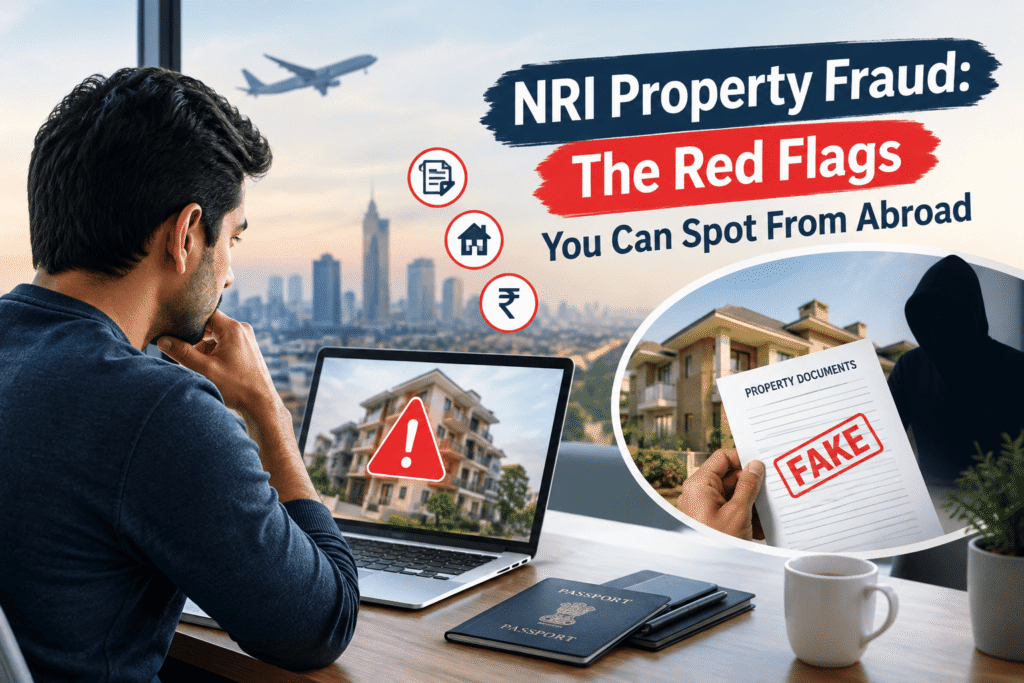
NRI Property Fraud: The Red Flags You Can Spot From Abroad
Owning a property in India can be a valuable asset for an NRI. It can be a family home, an inherited property, a rental investment, or a house bought for the future. But managing that property while living thousands of kilometers away can also bring serious challenges. One of the biggest concerns for NRIs is property fraud. When you are living abroad, you may not be able to visit your property regularly, meet tenants personally, check documents yourself, or keep an eye on every transaction. Fraudsters and dishonest intermediaries can take advantage of this distance. The good news is that many property frauds show warning signs before they become a major financial loss. Knowing what to look for can help NRIs protect their property and make better decisions. Why Are NRIs More Vulnerable to Property Fraud? Distance is one of the biggest problems. An NRI may own a flat in Delhi, a house in Punjab, land in Haryana, or an inherited property in another part of India. If the owner lives in the US, UK, Canada, Australia, or another country, regular physical checks become difficult. Sometimes, an NRI depends completely on a relative, property agent, tenant, caretaker, or another local person. This does not mean that every local representative is unreliable. Many people manage properties responsibly. However, an owner should still have proper records, clear communication, and independent verification. A property should never be managed only on trust. Red Flag 1: Someone Avoids Showing Original Property Documents One of the first warning signs is when someone keeps giving excuses about property papers. An NRI should know where important documents are kept and who has access to them. Depending on the property and transaction, these may include the sale deed, title documents, tax receipts, registration records, society records, and other relevant paperwork. If someone says, “Everything is fine, you don’t need to check,” that should not be ignored. Before making any major property decision, documents should be checked through appropriate legal and official channels. Red Flag 2: Unexplained Changes in Ownership or Records Unexpected changes in property records can be a serious warning sign. For example, an NRI may suddenly discover that a property record contains unfamiliar information, a new person is claiming an interest in the property, or someone has started dealing with the property without the owner’s knowledge. If something does not match your previous records, investigate it immediately. Do not depend only on a phone call or verbal explanation. Ask for documents and verify information independently. Red Flag 3: Pressure to Sign a Power of Attorney A Power of Attorney can be useful when an NRI cannot personally handle property-related work in India. But giving broad authority to another person without understanding its scope can create serious problems. Be careful if someone pressures you to sign quickly or tells you that a general Power of Attorney is required for every small property task. Before signing, understand exactly: Who is receiving the authority? What actions can that person take? Is the authority limited to a particular property? Can the person sell, transfer, lease, or mortgage the property? How and when can the authority be cancelled? For important transactions, getting independent legal advice is sensible. Red Flag 4: Rent Is Not Reaching Your Account Rental income is another area where problems can remain hidden for a long time. Suppose your property is rented out, but the rent suddenly becomes irregular. You may be told that the tenant has not paid, the property is vacant, or maintenance expenses have increased. One missed payment may have a genuine reason. But repeated unexplained deductions or missing rent should be investigated. NRIs should maintain a clear record of rent received, expenses paid, maintenance work, and communication with the tenant or property representative. Red Flag 5: Someone Refuses Property Inspection A simple property inspection can reveal problems that photographs or phone calls cannot. Be cautious if the person managing your property repeatedly refuses to arrange an inspection or keeps postponing a visit. A property can develop issues such as water leakage, structural damage, unauthorised occupation, poor maintenance, or changes made without permission. Regular physical inspection becomes especially important when the owner lives abroad. This is one reason professional Nri property management in india can be useful for owners who cannot personally visit their property regularly. Red Flag 6: Unusually Low Property Valuation Another warning sign is an unexpectedly low valuation. Imagine an NRI wants to sell a property and an agent immediately says that the property is worth far less than expected. The agent then pushes for a quick sale. Before accepting such a valuation, compare information from multiple credible sources and consider getting an independent property valuation. Do not make a major financial decision based on one person’s opinion. At the same time, remember that property prices can vary significantly depending on location, condition, title status, market demand, and other factors. A low valuation is a reason to investigate, not automatic proof of fraud. Red Flag 7: Cash Transactions and Poor Records Large property-related payments should never be handled casually. If someone insists on unexplained cash payments, refuses to provide receipts, or avoids written records, treat it as a serious warning sign. Keep agreements, receipts, bank records, maintenance bills, tax documents, and other important paperwork safely organised. Good documentation can become extremely important if a dispute occurs later. Red Flag 8: A Tenant or Occupant Suddenly Changes Sometimes an NRI may believe that a trusted tenant is living in the property, only to discover later that another person is occupying it. This can happen when a tenant sublets the property without permission or when arrangements are made without the owner’s knowledge. A proper rental agreement, tenant verification where applicable, regular communication, and periodic inspection can help reduce this risk. How NRIs Can Protect Their Property From Abroad Property protection does not require an owner to be physically present every week. It requires proper planning. Start by keeping all important property documents organised. Maintain