
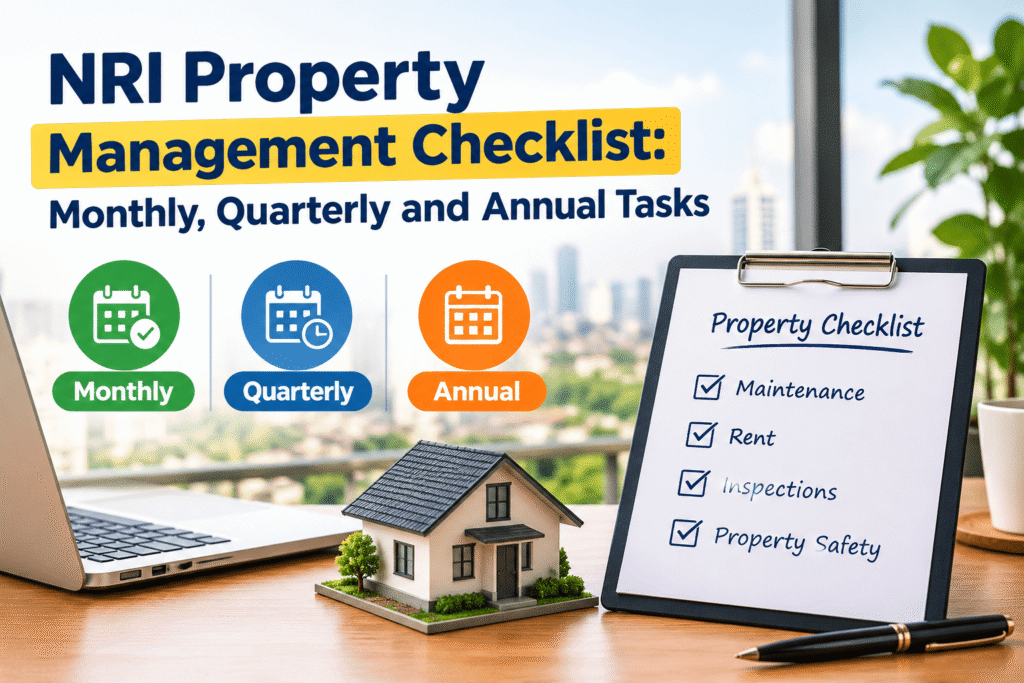
NRI Property Management Checklist: Monthly, Quarterly and Annual Tasks
For an NRI, owning a property in India is often easier than managing it from another country. The property may be a family home, an apartment bought as an investment, a rented house or a property kept for the future. Whatever its purpose, it still needs regular attention. A leaking tap does not wait for your next trip to India. Neither does seepage, a tenant’s complaint, an unpaid maintenance bill or an electrical problem. And when you are living thousands of kilometres away, even a small issue can turn into a long chain of phone calls. This is why having a simple NRI property management checklist can make a big difference. Instead of thinking about property maintenance only when something goes wrong, divide the work into three categories: monthly, quarterly and annual tasks. A clear routine helps you know what needs to be checked, when it needs to be checked and who is responsible for handling it. For NRIs who cannot regularly visit their property, professional Property Management Services in India can also provide the local support needed to keep these tasks on track. Why NRIs Need a Property Management Checklist When you live in India, property management often happens naturally. You notice a dripping tap. You see that the paint is getting damaged. The society sends a notice. A tenant calls you. You can visit the property if something needs to be checked. Living abroad changes that. Your property may be sitting in another city while you are working in London, Dubai, Toronto, Singapore or Sydney. You may hear about a problem only after it has already become serious. A checklist changes the approach from: “Something is wrong. What do I do now?” to: “This was scheduled to be checked, and we already know its condition.” That small difference can make remote property ownership much easier. Monthly NRI Property Management Checklist Monthly tasks are mostly about staying informed. They don’t necessarily require major maintenance. The purpose is to make sure nothing important is being missed. Check the Property If the property is vacant, arrange a physical visit. The inspection should look for obvious signs of: Water leakage Dampness Pest activity Electrical issues Damage to doors or windows Unusual smells Security concerns General cleanliness For a rented property, check whether the tenant has reported any maintenance issue. If you cannot visit yourself, ask the person handling the property to share photographs or videos. Check Rent and Property Expenses If the property is rented, confirm that the expected rent has been received. Also keep track of regular expenses such as: Society maintenance Electricity Water Property-related services Repairs Other recurring charges A monthly statement can make this much easier for an NRI owner to review. You don’t need a complicated system. You simply need to know what came in, what went out and why. Speak to the Tenant If someone is living in your property, don’t wait until there is a major complaint before communicating. A simple monthly check-in can help identify small issues early. For example, a tenant may mention that the bathroom tap has started leaking or the air conditioner isn’t working properly. These are easier to deal with when addressed early. Check Society or Building Updates Apartment owners should also stay aware of communication from the housing society or building management. There could be information about: Maintenance work Building repairs Parking Security Access Water supply Other society-related matters An NRI may miss these updates simply because they are not physically present. Having a local representative or property manager monitor them can help. Quarterly NRI Property Management Checklist Monthly checks keep you informed. Quarterly checks should go a little deeper. Think of these as a more detailed health check for your property. Conduct a Detailed Property Inspection Every few months, arrange a proper inspection rather than relying only on tenant feedback or occasional photographs. Check the: Kitchen Look at taps, drainage, cabinets, appliances and signs of leakage. Bathrooms Check water fittings, drainage, seepage and ventilation. Bedrooms and Living Areas Look for dampness, damaged walls, furniture issues and electrical problems. Balcony and Exterior Areas Check drainage, cracks, water accumulation and general condition. Doors and Windows Check locks, handles, hinges and visible damage. A property inspection is particularly important when the house remains vacant. Review Completed Repairs If repairs were carried out during the previous few months, review them. Ask: What was repaired? Who completed the work? What did it cost? Was the problem actually resolved? Is there any warranty or service period? Are photographs available? Keeping this information together makes it much easier to manage your property from abroad. Review Tenant-Related Issues For rented properties, quarterly reviews are a good opportunity to look at the bigger picture. Is the tenant raising repeated maintenance complaints? Are payments being received as expected? Is the property being maintained properly? Are there any changes that need attention? The aim isn’t to interfere unnecessarily with the tenant. It is simply to make sure the property remains in good condition. Review Property Documents Keep important property documents organised digitally. Depending on the property and your circumstances, these may include: Sale deed Registration documents Tax records Society documents Rental agreement Maintenance records Repair invoices Insurance documents Utility records For an NRI, having digital access to these documents can save considerable time when something needs to be checked from abroad. Annual NRI Property Management Checklist Annual tasks are about stepping back and looking at the property as a whole. Instead of asking, “Is there any problem today?” ask: “How has the property performed over the last year?” Review the Overall Condition Look at the property from top to bottom. Does it need painting? Are appliances becoming old? Are there recurring plumbing problems? Does the property need professional cleaning? Are there signs of long-term dampness or deterioration? Small repairs that keep repeating may indicate that a larger solution is needed. Review Rental Performance If your property is rented, review the year’s numbers. Look at: Total rent received Vacancy periods