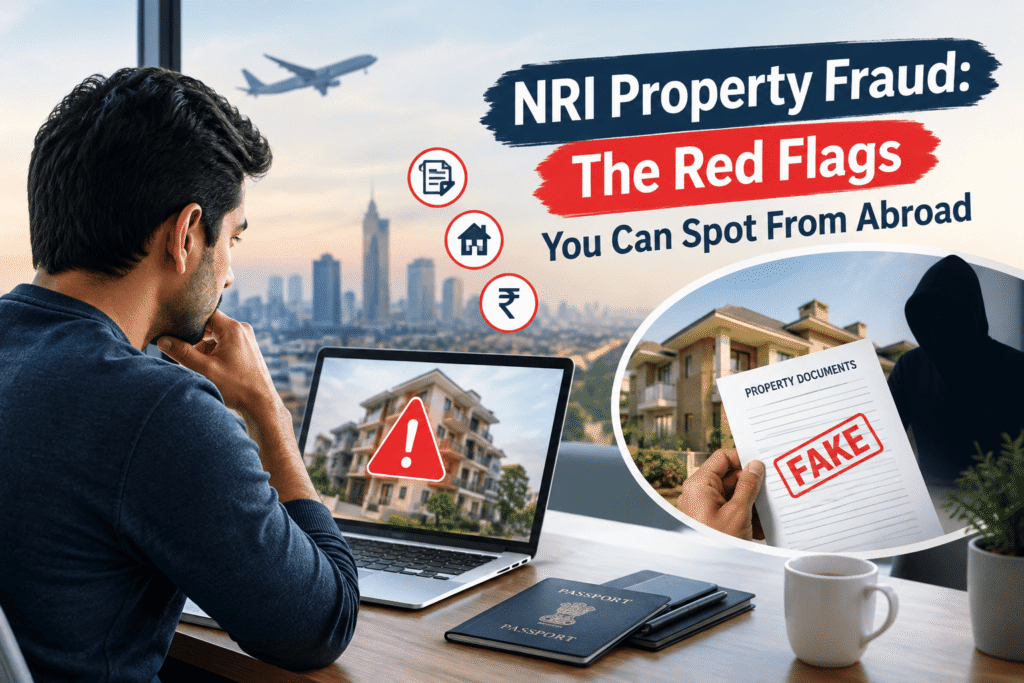

Owning property in India while living abroad can sometimes feel difficult, especially when you need to sell the property but cannot travel to India. A common concern among Non-Resident Indians (NRIs) is whether someone else can sell their property in India when they are not physically present.
The simple answer is yes, an NRI can sell property in India without being physically present, but another person cannot simply sell it on their behalf without proper legal authority and documents.
If you are an NRI property owner, understanding the legal process can help you avoid fraud, unnecessary delays, and disputes.
Can Someone Else Sell an NRI’s Property?
An NRI can authorize another person to handle the property sale through a Power of Attorney (POA).
A Power of Attorney is a legal document that allows one person to act on behalf of another person for specified matters. For example, an NRI living in the USA may authorize a trusted family member in India to manage the sale of their apartment.
However, simply being a relative, friend, tenant, or property manager does not give someone the automatic right to sell an NRI’s property.
The person selling the property on the NRI’s behalf must have valid legal authority to do so.
How Does an NRI Sell Property Without Coming to India?
There are generally two practical options.
1. Sale Through Power of Attorney
The NRI can appoint a trusted person in India through a properly executed Power of Attorney.
The POA should clearly mention the authority being given. If the purpose is to sell a particular property, the document should provide appropriate details and powers related to the transaction.
The NRI may execute the document in the country where they currently live. Depending on where it is executed and the applicable requirements, it may need to be notarised, authenticated or attested, and then completed with the required formalities in India.
Because the exact procedure can vary, NRIs should check the requirements applicable to their situation before signing the document.
2. The NRI Can Complete the Sale With Proper Arrangements
In some situations, an NRI may not need to appoint someone to sell the property on their behalf. They can coordinate the transaction from abroad and complete the required documentation through the appropriate process.
The exact requirements depend on the property, transaction, documents, and applicable registration and tax rules.
For a large property transaction, it is sensible to take advice from a qualified property lawyer or tax professional before proceeding.
Can a Family Member Sell an NRI’s Property?
Being a family member does not automatically give someone the right to sell an NRI’s property.
For example, if an NRI owns a house in Delhi, their brother or parent cannot legally sell that property simply because they are related to the owner.
The owner must provide the necessary legal authority.
This is particularly important in families where property documents, inheritance, or ownership records are not properly maintained. Before allowing anyone to handle a sale, the NRI should verify the person’s identity, authority, and the property’s ownership documents.
What Documents May Be Required?
The documents required can vary depending on the property and transaction. Common documents may include:
- Sale deed or title documents
- Previous property documents
- PAN card
- Passport and NRI status-related documents
- Property tax records
- Encumbrance-related records, where applicable
- Power of Attorney, if someone is acting on the NRI’s behalf
- Bank details for receiving the sale proceeds
- Other documents required by the registrar, buyer, bank, or tax professional
The buyer and seller may also need to complete documentation related to registration and applicable taxes.
NRIs should keep copies of all important documents and transaction records.
What About Tax When an NRI Sells Property in India?
Selling property in India can have tax implications for an NRI.
The tax treatment may depend on factors such as the type of property, how long the property was held, the purchase price, sale price, improvement costs, and applicable tax rules.
There can also be tax deduction requirements for the buyer when purchasing property from an NRI.
Because tax rules can change and individual circumstances differ, an NRI should speak with a qualified tax professional before finalising the transaction.
Planning the tax side before the sale can help avoid surprises later.
Can an NRI Give a General Power of Attorney?
An NRI should be careful about giving broad powers to another person.
A general Power of Attorney may provide wider authority than the owner actually wants to give. For a property sale, it is often important to clearly define what the authorised person can and cannot do.
For example, the document may specify the particular property and the actions the authorised person is allowed to undertake.
Before signing any POA, an NRI should have the document reviewed by a qualified legal professional familiar with Indian property transactions.
What If Someone Tries to Sell the Property Without Permission?
If someone attempts to sell an NRI’s property without valid authority, the situation can become a serious legal matter.
An NRI should regularly check the status of their property, keep original documents secure, and avoid handing over important documents to unknown people.
If there is a suspected fraudulent transaction, forged document, or unauthorised sale attempt, the property owner should seek legal advice immediately.
Acting quickly can be important when ownership or property documents are involved.
How Can NRIs Protect Their Property From Fraud?
Living outside India can make it harder to personally monitor a property. However, NRIs can take several practical steps to reduce the risk of fraud.
First, keep all ownership documents safely stored. Second, make sure property tax and other important payments are not being ignored. Third, maintain contact with trusted people who can physically check the property when required.
NRIs can also use professional NRI Services in India when they need assistance with property-related matters, documentation, maintenance, or other responsibilities.
For owners who need regular supervision, Property Management Services in India for nri can also help with activities such as property inspections, maintenance coordination, tenant-related matters, and keeping the owner informed about issues at the property.
Professional support does not replace legal advice, but it can make it easier for an NRI to keep track of what is happening with their property while living abroad.
Important Things to Check Before Giving Someone Power of Attorney
Before authorising another person, an NRI should carefully consider:
- Is the person completely trustworthy?
- Does the POA clearly identify the property?
- Does it specify the powers being granted?
- Has a qualified lawyer reviewed the document?
- Are the required authentication and registration formalities completed?
- How will the sale proceeds reach the NRI?
- Have the applicable tax requirements been checked?
- Will the NRI receive copies of all sale and registration documents?
These checks may seem basic, but they can prevent serious problems later.
Final Thoughts
An NRI does not necessarily need to travel to India personally to sell their property. A properly authorised representative can handle the transaction when the necessary legal requirements are fulfilled.
However, an NRI should never assume that a relative, friend, tenant, or property manager automatically has the right to sell their property. Proper legal authority and documentation are essential.
Before selling, it is important to verify ownership documents, understand the Power of Attorney process, check applicable tax requirements, and take professional legal or tax advice where necessary.
For NRIs living abroad, staying informed and keeping control over property documents can make the selling process much safer and more manageable.