
Blogs

Char Dham Yatra for NRIs Kedarnath temple journey
Blogs

Char Dham Yatra for NRIs – A Complete Step-by-Step Guide (2026)

Planning Char Dham from Abroad? Read This First If you’re living outside India and thinking about doing the Char Dham Yatra, you’re probably excited… but also a little confused. Where do you start? How do you book everything? Is it safe for parents? What about altitude, travel, and temple access? You’re not alone. Many NRIs plan this journey every year, but most of them struggle with coordination, bookings, and on-ground support. This guide is written in a simple way, no complicated words, just real, practical help so you can plan your Char Dham Yatra and religious tourism smoothly from abroad. What is Char Dham Yatra? Char Dham Yatra is one of the most important spiritual journeys in India. It covers four sacred temples in Uttarakhand: Yamunotri Gangotri Kedarnath Badrinath People believe visiting these places helps cleanse the soul and bring peace. But beyond belief, it’s also a deep emotional journey, especially if you’ve been living away from India for years. The Route (Simple Breakdown) Most people follow this order: Yamunotri → Gangotri → Kedarnath → Badrinath You usually start from: Haridwar Rishikesh Dehradun Best Time to Visit The temples open around April/May and close by October/November. Best time: May to June (popular but crowded) September to October (less crowd, better experience) Avoid: July & August (heavy rain + landslides) Step-by-Step Planning for NRIs Step 1: Register for the Yatra Registration is mandatory. You’ll need: Passport / OCI Basic details Do this at least 2–3 weeks before travel. Step 2: Travel to India Most NRIs land in: Delhi Dehradun From there: Private cab Tour package Helicopter (optional) Step 3: Book Stay in Advance Places like Kedarnath have very limited hotels. Always book: Hotels Guesthouses Travel packages Don’t rely on last-minute booking. Step 4: Consider Helicopter (Especially for Parents) If you’re traveling with family or elderly parents, this can make a huge difference. Helicopter services are available for: Kedarnath Full Char Dham packages Saves time and avoids long trekking. Step 5: Temple Darshan Planning You have two options: Normal darshan (long queues) VIP darshan (faster) During peak season, lines can go up to 5–8 hours. VIP access is worth it if you’re short on time. Step 6: What to Pack Warm clothes Comfortable shoes Medicines Rain jacket Power bank Even in summer, it can get cold. Step 7: Health Comes First This journey involves high altitude and walking. Important: Take rest Drink water Don’t rush Kedarnath can be physically challenging. Cost (Realistic Estimate) Budget: ₹30,000 – ₹50,000 Mid-range: ₹60,000 – ₹1,20,000 Luxury: ₹1.5L+ Helicopter packages: ₹2.5L – ₹5L Common Mistakes NRIs Make Booking too late Choosing cheap operators Ignoring health Poor planning Rushing the trip Why This Journey Feels Different If you’ve been away from India for years, this trip hits differently. You’re: Reconnecting with your roots Spending time with family Experiencing something meaningful Many NRIs say this becomes one of the most memorable journeys of their life. Make It Easy with the Right Support Planning from abroad can be stressful. Friends of NRI helps with: Complete Char Dham planning Hotel and travel bookings VIP darshan Elderly support On-ground help So you can focus on your journey, not the stress. we are helping in all type of NRI services FAQs How many days do I need? 10–12 days is ideal. Is it safe for elderly parents? Yes, with planning or helicopter services. Do NRIs need special documents? Passport or OCI is enough. Which is the hardest temple? Kedarnath due to altitude and trekking. Can I travel without a package? Yes, but planning becomes harder. Final Thoughts Char Dham Yatra is not just a trip. It’s a journey that connects you back to something deeper. If planned well, it will stay with you for years.

war impact on nri
Blogs

If You Are an NRI, Read This Before It’s Too Late (War Impact Guide)

Global uncertainty is rising. Conflicts, geopolitical tensions, and sudden crises are becoming more frequent and for NRIs living abroad, the impact can be deeper than expected. If you have property, family, finances, or legal ties in India, this is something you cannot ignore. Because when situations escalate, delays can cost you,  financially, legally, and emotionally. This guide explains what every NRI must know and do to stay protected during uncertain or war-like situations. Why NRIs Are More Vulnerable During Global Conflicts When tensions rise globally, NRIs face unique risks: Being physically away from India Limited access to local support Dependence on third parties Delays in travel or emergency return Financial and legal disruptions Even a small issue can quickly turn into a major problem when you cannot act immediately. 1. Your Property in India Could Be at Risk In uncertain times, unattended properties become vulnerable. Risks Include: Illegal possession or encroachment Tenant misuse or non-payment Unauthorized access or damage What You Should Do: Conduct regular property checks Keep documentation updated Appoint a trusted local representative If your property is not monitored, you are taking a serious risk. Property management services in India 2. Legal & Documentation Issues Can Escalate War or crisis situations can slow down systems. Risks: Court delays Legal disputes becoming prolonged Difficulty in handling documentation What You Should Do: Keep all documents digitized Update ownership records Assign legal authority carefully 3. Financial Access & Banking Disruptions In unstable conditions: Cross-border transactions may delay Currency fluctuations may impact savings Emergency funds may become harder to access What You Should Do: Maintain liquidity in India Diversify financial access Monitor banking compliance 4. Family Safety & Emergency Support If your family lives in India: Medical emergencies Safety concerns Immediate assistance needs What You Should Do: Ensure emergency contacts are active Arrange local support systems Stay connected regularly 5. Travel Restrictions Can Trap You Abroad During conflicts: Flights may get canceled Visa restrictions may tighten Emergency travel may not be possible What You Should Do: Prepare for remote handling of responsibilities Keep contingency plans ready 6. Fraud & Misuse Increase in Uncertain Times Crisis situations often lead to increased fraud targeting NRIs. Risks: Fake property claims Financial scams Misuse of Power of Attorney What You Should Do: Verify every transaction Avoid shortcuts Work only with trusted professionals 7. Communication Gaps Create Bigger Problems Lack of real-time updates leads to: Delayed decisions Misunderstandings Missed opportunities What You Should Do: Have a reliable local point of contact Ensure regular reporting and updates Most NRIs Realize This Too Late The biggest mistake NRIs make is: “I’ll handle it later when needed.” But when situations escalate: Time is limited Options are fewer Risks are higher How to Stay Protected as an NRI (Practical Checklist) Here’s what you should do immediately: ✔ Verify your property status✔ Keep all documents updated and digital✔ Review tenant agreements✔ Ensure financial accessibility✔ Stay connected with local support✔ Avoid dependency on unverified individuals How Friends of NRI Helps You Stay Secure In uncertain times, having a trusted partner in India makes all the difference. Friends of NRI provides complete on-ground support designed specifically for NRIs. ✔ Property Monitoring & Management We regularly check your property, prevent misuse, and provide real-time updates. ✔ Local Representation We act as your trusted presence in India, handling tasks when you cannot. ✔ Legal & Documentation Support We assist in managing paperwork, coordination, and professional connections. ✔ Emergency Support & Coordination Whether it’s property, family, or urgent matters, we help you respond quickly. Why NRIs Trust Friends of NRI Designed specifically for overseas clients Transparent communication Reliable local presence Professional, ethical approach Focus on real problem-solving best NRI services When you are far away, you need someone you can truly rely on. Reality Check: Preparation Is Not Optional Global situations can change overnight. Being prepared is not fear, it is smart planning. If you have: Property Family Financial interests in India, you must ensure they are protected, monitored, and managed even when you are not there. Don’t Wait Until It’s Too Late The difference between stress and control is preparation. Take action now: Review your situation Secure your assets Build a reliable support system Need Help Managing Things in India? Friends of NRI is here to support you, before problems become serious. Property management services in India Legal coordination On-ground support Complete NRI services 📞 Talk to Experts Today 📩 Get Free Consultation 👉 Stay safe abroad. Let us take care of things in India.

Top 10 Problems NRIs Face in India
Blogs

Top 10 Problems NRIs Face in India (And How to Solve Them)

Living abroad comes with opportunities, but staying connected to India often brings unexpected challenges. Whether it’s property, legal work, family responsibilities, or documentation, many NRIs struggle to manage things remotely. If you’ve ever felt frustrated dealing with issues in India while living overseas, you’re not alone. Here are the top 10 problems NRIs face in India, along with practical solutions to handle them smartly. 1. Property Management Issues One of the biggest concerns for NRIs is managing property in India. Common Problems: Illegal possession or encroachment Tenant disputes or unpaid rent Property left vacant for long periods Lack of trusted supervision Solution: Hire professional property management services in India that provide: Regular inspections Tenant handling Maintenance & reporting This ensures your property stays secure and profitable. 2. Legal & Documentation Complexity Indian legal processes can be complicated, especially when you are not physically present. New income tax rules for nris in India (ay 2026–27) Common Problems: Property documentation confusion Legal disputes Power of Attorney misuse Court delays Solution: Always consult verified legal experts Keep documents updated and digitized Avoid informal or verbal agreements 3. Taxation Confusion (TDS, Capital Gains) Many NRIs face issues with Indian tax laws. Common Problems: High TDS on property transactions Lack of clarity on tax exemptions Double taxation confusion Solution: Understand key rules like TDS and capital gains Use exemptions under Sections 54 & 54F Work with tax professionals for compliance Budget 2026 impact on nris 4. Banking & Financial Management Managing finances across countries can be tricky. Common Problems: NRE/NRO account confusion Fund transfer delays Compliance issues Solution: Maintain proper NRI bank accounts Track all financial transactions Use professional advisory when needed 5. Lack of Reliable Local Support This is one of the most common pain points. Problem: NRIs often depend on: Relatives Friends Unverified agents Which can lead to: Miscommunication Negligence Misuse of authority Solution: Work with trusted NRI service providers who act as your local representative. 6. Tenant & Rental Issues Rental management is difficult from abroad. Why nris are losing property in India  Common Problems: Tenants not vacating Rent delays Property misuse Solution: Proper rental agreements Background checks Professional tenant management 7. Maintenance & Repairs Delays Even small issues can turn into big problems when ignored. Common Problems: Delayed repairs Poor quality work No follow-up Solution: Regular inspections Verified vendors Maintenance tracking systems 8. Elderly Parents Care & Support Many NRIs worry about their parents living in India. best elderly care services in india Common Problems: Medical emergencies Daily assistance needs Emotional support Solution: Elder care services Emergency support systems Regular check-ins 9. Travel & Coordination Challenges Managing multiple tasks during short India visits is stressful. Religious tourism in India Common Problems: Time constraints Multiple appointments Lack of planning Solution: Pre-planned assistance services Local coordination support Task delegation 10. Fraud & Trust Issues Unfortunately, fraud cases involving NRIs are increasing. Common Problems: Fake property deals Document fraud Financial scams Solution: Verify everything legally Avoid shortcuts Work only with trusted professionals Why These Problems Happen Most NRI issues arise due to: Physical absence Lack of real-time information Dependence on unverified people Complex Indian systems How Friends of NRI Helps Solve These Problems At Friends of NRI, we specialize in solving real problems faced by NRIs in India. We provide complete NRI services, including: ✔ Property Management Services in India Property inspection Tenant handling Maintenance & reporting ✔ Legal & Documentation Support Assistance with property and legal matters Verified professionals ✔ On-Ground Local Support Trusted representative in India Coordination for all your needs ✔ End-to-End NRI Assistance From property to personal support, everything handled professionally. Why NRIs Trust Friends of NRI Designed specifically for overseas clients Transparent communication Reliable on-ground presence Problem-solving approach Professional & ethical services With Friends of NRI, you don’t have to manage everything alone from abroad. Final Thoughts Being an NRI doesn’t mean you should struggle with managing things in India. Most problems can be avoided or solved with: Right knowledge Timely action Trusted professional support Need Help Managing Your Property or Work in India? Let Friends of NRI handle it for you. Property management Legal coordination Ground support Complete NRI services Talk to Experts Today Get Free Consultation 👉 Stay stress-free abroad while we manage everything for you in India.

Someone Took Over My Property in India
Blogs

Someone Took Over My Property in India – What Should NRIs Do?

For many NRIs, owning property in India is a matter of pride, security, and long-term investment. But one of the most stressful situations you can face is this: “Someone has taken over my property in India without permission.” Unfortunately, this is not rare. From illegal possession and tenant refusal to vacate, to fraudulent sales and misuse by relatives, property disputes are a growing concern for NRIs living abroad. If you are facing this situation, don’t panic. There are legal, practical, and immediate steps you can take to regain control of your property. Why NRI Properties Are at Risk in India NRIs are often targeted because: Properties remain vacant for long periods Owners are physically absent Documentation may not be regularly updated Local supervision is weak or dependent on others This creates opportunities for: Illegal occupation (encroachment) Fake tenants or overstaying tenants Unauthorized use by known individuals Forged documents or fraudulent transfers Common Types of Property Issues NRIs Face 1. Illegal Possession (Encroachment) Someone occupies your property without legal rights and refuses to leave. 2. Tenant Refusing to Vacate Tenant stops paying rent or refuses to vacate after agreement ends. 3. Property Misuse by Relatives Family members or acquaintances start using the property without permission. 4. Fraudulent Sale or Transfer In rare but serious cases, fake documents are used to sell or claim ownership. First Step: Verify the Situation Properly Before taking action, confirm: Current status of your property Who is occupying it Whether any legal agreement exists Condition of the property This step is critical to avoid acting on incomplete or incorrect information. Immediate Actions NRIs Should Take 1. Collect All Property Documents Ensure you have: Sale deed Property tax receipts Electricity/water bills Previous agreements These documents prove ownership. 2. Avoid Direct Conflict Do not try to handle the situation through: Threats Informal agreements Unverified agents This can worsen the issue legally. 3. Contact a Local Legal Expert A property lawyer in India can: Review your documents Suggest legal action Send legal notices Initiate eviction or recovery process 4. Send Legal Notice In many cases, a legal notice is the first formal step to: Establish your ownership Demand vacation of property Start legal proceedings if ignored 5. File Police Complaint (If Required) If the case involves: Illegal entry Fraud Threats You can file an FIR or complaint. 6. Initiate Legal Proceedings Depending on the situation: Eviction case Civil suit for possession Injunction to stop misuse Legal action may take time, but it is the correct and safest approach. how nris can claim inherited property in india Biggest Mistake NRIs Make (Avoid This) Many NRIs: Ignore early warning signs Trust verbal assurances Delay action Depend fully on relatives This often leads to long-term legal complications and financial loss. why nris are losing property in india How to Prevent Property Issues in Future Prevention is always better than recovery. Regular property inspections Verified tenant agreements Legal documentation updates Appointing a trusted property manager Keeping digital records of all documents How Friends of NRI Helps You Protect and Recover Your Property This is where professional support becomes critical. At Friends of NRI, we understand the emotional and financial value of your property. Our dedicated NRI property management and support services are designed to protect your property and assist you in difficult situations like unauthorized possession. ✔ Property Verification & Ground Reality Check We physically inspect your property and provide you with real updates, photos, and reports. ✔ Local Coordination & Representation We act as your trusted local point of contact in India, handling communication and coordination on your behalf. ✔ Legal Assistance & Documentation Support We connect you with experienced professionals to initiate proper legal action and guide you through the process. ✔ Tenant & Property Management Services We help manage tenants, ensure agreements are followed, and prevent misuse. ✔ Regular Monitoring & Reporting Our team ensures your property is never left unattended, reducing future risks. Why NRIs Trust Friends of NRI Specialized focus on NRI property issues Reliable on-ground support across India Transparent communication Professional and ethical approach Designed specifically for overseas clients With Friends of NRI, you don’t have to handle property problems alone — even from thousands of miles away. Real Truth: Acting Early Makes All the Difference The longer a property remains under unauthorized possession, the harder it becomes to recover it. Early action ensures: Faster resolution Lower legal complications Better control over your asset Frequently Asked Questions (FAQs) What should I do if someone illegally occupies my property in India? Start by verifying the situation, collecting documents, and contacting a legal expert. Avoid direct confrontation. Can NRIs take legal action from abroad? Yes. NRIs can appoint representatives or lawyers to act on their behalf in India. How long does property recovery take? It depends on the case, but early action significantly improves timelines. Can property management services prevent such issues? Yes. Regular monitoring and professional management reduce the risk of unauthorized possession. Take Back Control of Your Property Today If you suspect or know that someone has taken over your property in India, do not delay action. With the right support, documentation, and legal approach, you can regain control and protect your investment. Need Help Managing or Recovering Your Property? Friends of NRI is here to help you every step of the way. Property inspection & verification Legal coordination & support Tenant & property management Complete NRI assistance services Talk to Our Property Experts Today Get a Free Property Assessment Let Friends of NRI protect your property in India , while you stay worry-free abroad. best nri services

How to Arrange Home Nurse for Parents in India
Blogs

How to Arrange Home Nurse for Parents in India (Complete NRI Guide 2026)

Arranging proper care for elderly parents in India while living abroad is one of the biggest concerns for Non-Resident Indians (NRIs). Medical emergencies, post-hospital care, and daily health support require trained professionals and this is where home nursing services in India become essential.  also Best Elderly Care Services in India If you are an NRI wondering how to arrange a home nurse for your parents in India safely and reliably, this guide will walk you through everything step-by-step. Why NRIs Need Home Nursing Services in India As parents age, they may require: Regular medical supervision Assistance with daily activities Post-surgery or hospital recovery care Chronic disease management Emergency support Managing this from overseas is difficult. Hiring a professional home nurse in India ensures your parents receive timely, safe, and professional care even when you are not physically present. What Does a Home Nurse Do? A trained home nurse provides medical and personal care at home. Key Responsibilities Include: Monitoring vital signs (BP, sugar levels, oxygen) Administering medications and injections Wound dressing and post-surgery care Assisting with mobility and daily routines Coordinating with doctors Providing emergency support Home nurses can be hired part-time, full-time, or 24/7, depending on the patient’s needs. Types of Home Nursing Services Available in India Understanding service types helps you choose the right option. 1. Basic Caregiver Support Help with daily activities Medication reminders Light support 2. Skilled Nursing Care Medical procedures Injections, IV, wound care Post-surgery recovery 3. ICU-Level Home Care Advanced medical equipment Continuous monitoring Critical patient care Step-by-Step: How to Arrange a Home Nurse in India Follow this practical process to ensure safe and reliable care. Step 1: Assess Your Parents’ Medical Needs Start by understanding: Current health condition Doctor’s recommendations Required level of care Duration (short-term or long-term) This helps in selecting the right type of nurse or caregiver. Step 2: Choose a Trusted Home Healthcare Provider Avoid hiring random individuals without verification. Instead, look for: Registered home healthcare companies Verified and trained staff Experience in elderly care Positive reviews or references Professional agencies provide background-verified nurses, which reduces risk. Step 3: Verify Qualifications and Experience Before finalizing: Check nurse certification Ask about experience with similar medical cases Confirm language compatibility (important for elderly comfort) Never skip verification — this is critical for safety. Step 4: Decide Duration and Timing Choose based on need: Hourly care → basic support Full-day nurse → regular monitoring 24/7 live-in nurse → serious medical conditions Discuss flexibility in case requirements change. Step 5: Understand Costs Clearly Costs depend on: Type of care Duration Medical complexity City location Approximate Cost Range Service Type Monthly Cost Basic caregiver ₹15,000 – ₹25,000 Skilled nurse ₹25,000 – ₹50,000 24/7 critical care ₹50,000+ Always confirm: No hidden charges Replacement policy Emergency support Step 6: Set Up Communication System As an NRI, staying connected is important. Ensure the provider offers: Regular health updates WhatsApp or video call support Monthly reports Emergency notifications Transparency builds trust. Step 7: Monitor Performance Regularly Even after hiring: Take feedback from parents Request updates Conduct random video checks Replace nurse if needed Active monitoring ensures quality care. Common Mistakes NRIs Should Avoid Avoid these mistakes to prevent problems: Hiring without verification Choosing lowest cost over quality Not defining responsibilities clearly Lack of communication setup Ignoring medical requirements These mistakes can risk your parents’ safety. Can NRIs Arrange Home Nurses Without Visiting India? Yes, absolutely. NRIs can: Hire services online Coordinate via phone/video Use local representatives or agencies Make payments digitally Many providers are now NRI-friendly, offering remote support and updates. Benefits of Hiring Professional Home Nursing Services Peace of Mind You know your parents are being cared for by trained professionals. Medical Safety Proper treatment and monitoring reduce health risks. Convenience No need for frequent hospital visits. Emotional Support Caregivers also provide companionship. When Should You Consider a Home Nurse? You should arrange a home nurse if: Parents are recovering from surgery They have chronic illness They live alone They need daily assistance There is risk of medical emergencies Early planning avoids last-minute stress. Frequently Asked Questions (FAQs) How can NRIs hire a home nurse in India? NRIs can hire through verified home healthcare agencies that offer remote coordination and regular updates. Is home nursing safe in India? Yes, if hired through trusted and verified service providers. What is the cost of a home nurse in India? Costs typically range from ₹15,000 to ₹50,000+ per month depending on care level. Do home nurses provide 24/7 care? Yes, many providers offer full-time and live-in nursing services. Final Thoughts Arranging a home nurse for your parents in India may seem challenging from abroad, but with the right approach, it becomes a safe and manageable process. The key is to: Choose trusted providers Verify credentials Maintain communication Monitor regularly For NRIs, this is not just a service, it is about ensuring your parents live with dignity, safety, and proper care, even when you are far away. If you are planning to arrange care for your parents, professional NRI services in India can help you manage everything — from caregiver selection to ongoing monitoring and support.

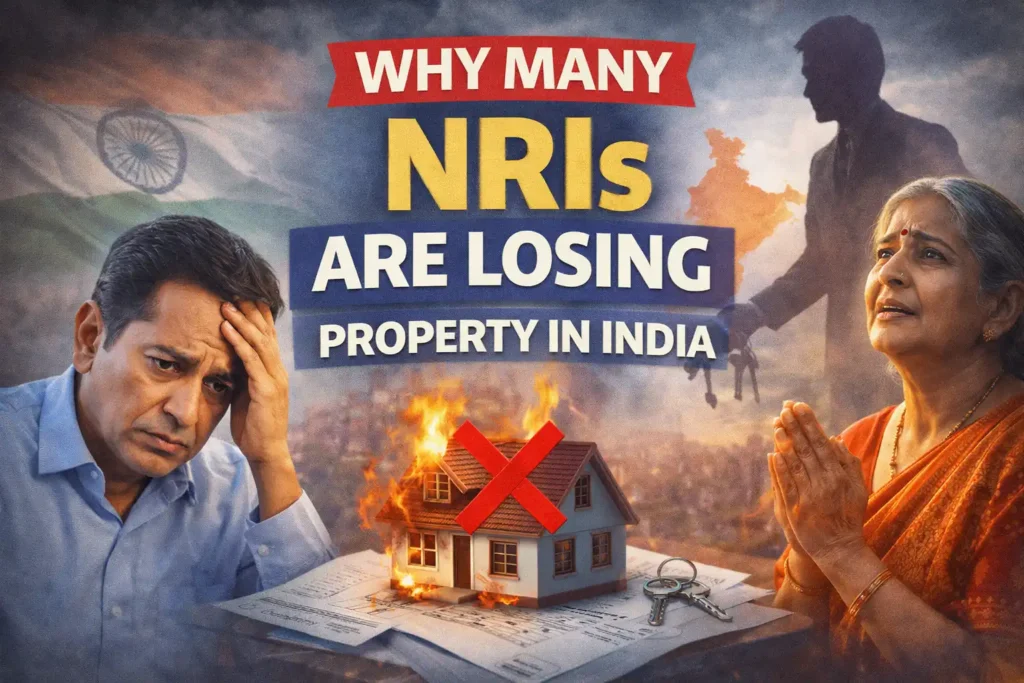
Why NRIs are losing property in India
Blogs

Why NRIs Are Losing Property in India (And How to Protect Yours)

For many Non-Resident Indians (NRIs), property in India is more than just an investment — it’s an emotional connection to home, family, and future security. But here’s the reality most NRIs don’t talk about: Thousands of NRIs are silently losing control of their property in India. From illegal occupation and tenant disputes to fraud, document misuse, and legal complications, the risks are real, and they are increasing. The good news?With the right steps, you can fully protect your property even while living abroad. This guide explains: Why NRIs are losing property Real risks you must understand Practical steps to secure your property The Growing Problem: Why NRI Properties Are at Risk Owning property remotely creates visibility and control gaps. Most problems start because: The owner is not physically present There is no structured management system Decisions are based on trust, not verification Over time, this leads to serious financial and legal consequences. Top Reasons NRIs Are Losing Property in India 1. Illegal Occupation & Encroachment One of the biggest threats is unauthorized occupation. Vacant properties are especially vulnerable to: Local encroachment Unauthorized tenants Misuse by caretakers Once occupied, eviction can take months or even years. 2. Trusting the Wrong People Many NRIs rely on: Relatives Friends Local brokers Without proper legal structure, this can lead to: Mismanagement Financial misuse Unauthorized decisions Trust without documentation is risk. 3. Weak or Missing Legal Documentation Poor documentation is a major issue. Common problems include: Unregistered agreements Outdated property records Missing ownership clarity Improper Power of Attorney These gaps can be exploited easily. 4. Tenant Disputes & Rental Issues Tenants can become a major risk if not managed properly. Problems include: Non-payment of rent Refusal to vacate Property damage Legal complications Without a strong agreement, eviction becomes difficult. 5. Lack of Regular Monitoring Properties left unchecked for long periods face: Structural damage Water leakage issues Illegal use Decline in property value NRIs who visit India once every few years often discover issues too late. 6. Fraud & Property Scams Property fraud targeting NRIs is increasing. Common scams: Fake sale agreements Forged signatures Illegal resale attempts Duplicate ownership claims These cases can become complex and time-consuming legally. 7. Ignoring Tax & Legal Compliance Many NRIs ignore: Property tax payments Income tax on rental income TDS rules on sale Society dues This can lead to penalties, disputes, and blocked transactions. Real Impact: What NRIs Actually Lose When property is mismanaged, NRIs can lose: Rental income Property value Legal ownership control Time and money in court cases Peace of mind In worst cases, recovery becomes extremely difficult. How to Protect Your Property in India (Step-by-Step) Now let’s focus on the most important part — protection. 1. Appoint a Professional Property Management Service This is the most effective solution. A reliable Property Management Service in India provides: Regular inspections Tenant handling Maintenance management Legal coordination Monthly reports with proof This removes dependency on informal systems. 2. Use a Legally Valid Power of Attorney (POA) A properly drafted POA ensures: Authorized representation Legal clarity Smooth transactions Make sure: POA is notarized abroad Attested by Indian Embassy Registered in India 3. Keep All Property Documents Updated Maintain: Title deed Sale agreement Tax receipts Encumbrance certificate Digital copies should also be stored securely. 4. Do Strict Tenant Verification Before renting: Verify identity and background Conduct police verification Draft a strong legal agreement Avoid verbal or informal arrangements. 5. Schedule Regular Property Inspections Even if managed professionally: Inspect every 3–6 months Check structural condition Monitor usage Prevention is always cheaper than repair. 6. Use Digital Monitoring & Reporting Modern property management includes: Photo/video updates WhatsApp/email reporting Online rent tracking Transparency ensures control from abroad. 7. Stay Compliant with Taxes & Laws Ensure: Property tax is paid on time Rental income is declared TDS rules are followed Legal records are updated Compliance prevents future legal issues. 8. Avoid Leaving Property Vacant for Long Vacant property = high risk If possible: Rent it outOR Maintain regular supervision Occupied properties are generally safer. What Is the Safest Strategy for NRIs? The safest approach includes: ✔ Professional management✔ Legal documentation✔ Regular monitoring✔ Financial transparency✔ Compliance with tax laws This combination ensures complete protection and long-term value growth. Warning Signs You Should Not Ignore If you notice any of these, take immediate action: No updates about your property Delayed rent payments Unknown people using property Missing documents Sudden legal notices Ignoring early signs leads to bigger problems. FAQs Why do NRIs lose property in India? Due to lack of monitoring, poor documentation, and over-reliance on informal management. Is property management necessary for NRIs? Yes. It significantly reduces risk and ensures proper handling. Can NRIs protect property without visiting India? Yes, with proper systems like POA and professional services. Is it risky to keep property vacant? Yes. Vacant properties are more prone to encroachment and misuse. Final Thoughts Owning property in India should be a valuable asset not a hidden risk. The truth is simple: If your property is unmanaged, it is vulnerable.If it is structured and monitored, it is secure. NRIs who take proactive steps today can: Protect their investment Generate stable income Avoid legal complications Maintain long-term value Your property deserves attention even from miles away. Protect Your Property in India Even While Living Abroad If you’re an NRI, your property in India should be a secure asset not a constant worry. Our professional Property Management Services in India are designed to help you stay in control, no matter where you live. From tenant handling and maintenance to legal coordination and regular reporting, we ensure your property is protected at every step. With our specialized NRI services, you don’t need to depend on relatives, brokers, or guesswork. You get complete transparency, structured management, and peace of mind.

How NRIs can claim inherited property in India
Blogs

How NRIs Can Claim Inherited Property in India (Legal Guide – 2026)

Inheriting property in India while living abroad can be both a blessing and a legal challenge. Many Non-Resident Indians (NRIs) struggle with documentation, legal procedures, ownership transfer, and compliance requirements. The good news is — NRIs can legally inherit property in India without restrictions, but the process must be handled correctly to avoid disputes, delays, or legal complications. This complete guide explains how NRIs can claim inherited property in India, step-by-step, with legal clarity. Can NRIs Inherit Property in India? Yes. NRIs, Persons of Indian Origin (PIOs), and Overseas Citizens of India (OCIs) are legally allowed to inherit property in India. NRIs can inherit: Residential property Commercial property Agricultural land (only through inheritance, not purchase) There are no restrictions on inheritance, provided the property was legally owned by the previous owner. What Types of Property Can NRIs Inherit? NRIs can inherit almost all types of property in India. Allowed Property Types Residential flats and houses Commercial buildings and shops Agricultural land (only via inheritance) Ancestral property Important: NRIs cannot purchase agricultural land directly, but inheritance is allowed under Indian law. Step-by-Step Process to Claim Inherited Property in India Step 1: Obtain the Death Certificate The first and most important document is the death certificate of the deceased property owner. It is required for: Ownership transfer Legal verification Mutation process This document must be issued by the local municipal authority in India. Step 2: Identify the Legal Heirs Ownership depends on whether the deceased left a Will. Case 1: Property with a Will Property is transferred according to the Will Beneficiary must prove authenticity Case 2: Property Without a Will (Intestate) Property is distributed as per Indian succession laws Legal heirs must be identified Succession Laws Applicable in India Different laws apply depending on religion: Hindu Succession Act – for Hindus, Sikhs, Jains, Buddhists Muslim Personal Law – for Muslims Indian Succession Act – for Christians and others Understanding applicable law is crucial for correct ownership distribution. Step 3: Obtain Legal Heir Certificate or Succession Certificate To claim inherited property, NRIs must obtain: Legal Heir Certificate (for basic ownership transfer)OR Succession Certificate (for financial assets and disputes) These documents establish rightful ownership. Step 4: Probate of Will (If Applicable) If a Will exists, probate may be required in certain cases. Probate is: Legal validation of the Will by a court Mandatory in cities like Mumbai, Chennai, and Kolkata Recommended for dispute-free ownership Step 5: Transfer Ownership (Mutation Process) Mutation is the process of updating property records in government records. This ensures: Property is legally recorded in your name You can sell or rent the property You can pay property tax Documents required: Death certificate Will or succession proof ID proof Property documents Step 6: Update Utility & Tax Records After mutation, update: Property tax records Electricity and water bills Society records This prevents future legal or financial issues. Do NRIs Need to Visit India to Claim Property? Not always. NRIs can manage the process remotely using: Power of Attorney (POA) Authorized representative in India POA Must Be: Notarized in your country of residence Attested by Indian Embassy/Consulate Registered in India This allows someone to act legally on your behalf. Take Control of Your Property in India From Anywhere in the World Managing property in India while living abroad shouldn’t be stressful or uncertain.Our professional Property Management Services in India, combined with end-to-end NRI services, are designed to give you complete peace of mind, transparency, and control — no matter where you live. From legal documentation and tenant management to maintenance, rent collection, and regular updates — we handle everything for you. Why NRIs Trust Our Services Dedicated on-ground team in India Complete NRI services under one roof Verified tenant handling & rent management Regular inspection with photo/video reports Transparent communication — no hidden costs Support tailored for NRIs in USA, UK, Canada & UAE We act as your local representative, ensuring your property is protected and performing. Stop Worrying About Your Property Back Home Whether your property is: Rented Vacant Newly inherited Or underutilized Our Property Management Services in India ensure it stays secure, maintained, and profitable. Tax Implications on Inherited Property for NRIs Is Inheritance Taxable in India? No. India does not have inheritance tax. However: Tax Applies When You: Sell the property → Capital gains tax Earn rental income → Income tax Capital Gains Tax for NRIs If you sell inherited property: Holding period is calculated from original owner’s purchase date Long-term capital gains (LTCG): 20% + surcharge + cess TDS applies on sale NRIs can also claim exemptions under certain conditions. Can NRIs Sell Inherited Property in India? Yes. NRIs can sell inherited property without restrictions. Requirements: Clear ownership documents PAN card TDS compliance Proper sale agreement Funds can be repatriated abroad under RBI guidelines. Common Challenges NRIs Face NRIs often encounter: Missing or incomplete documents Family disputes Illegal possession or encroachment Delayed mutation process Fraud risks These issues can delay ownership or reduce property value. How to Avoid Legal Problems To ensure smooth inheritance: Verify property title and ownership history Complete mutation as early as possible Keep all documents updated Avoid informal agreements Seek professional legal advice if needed Importance of Professional Assistance Handling inherited property remotely can be complex. Professional services help NRIs: Verify legal documents Complete ownership transfer Handle disputes Manage property after inheritance Ensure compliance with tax laws This ensures peace of mind and protects your asset. Frequently Asked Questions (FAQs) Can NRIs inherit agricultural land in India? Yes, but only through inheritance, not by purchase. Is probate mandatory for NRIs? Not always, but required in specific cities and cases. Can NRIs claim property without visiting India? Yes, through Power of Attorney. Is inherited property taxable in India? No inheritance tax, but tax applies on sale or rental income. Final Thoughts Understanding how NRIs can claim inherited property in India is essential to protect your rights and avoid legal complications. The process is straightforward when handled correctly — but small mistakes can lead

Best Elder Care Services for NRI Parents in India
Blogs

Best Elder Care Services for NRI Parents in India (2026 Guide)

For millions of Non-Resident Indians (NRIs), one of the biggest emotional concerns is ensuring that their elderly parents in India receive proper care, support, and companionship. Living abroad often makes it difficult to manage medical needs, daily assistance, and emergency situations for aging parents. Fortunately, professional elder care services in India have grown significantly in recent years. These services help NRIs ensure that their parents are safe, healthy, and supported even when they live thousands of miles away. This guide explains the best elder care services for NRI parents in India in 2026, what services are available, how they work, and how NRIs can choose the right provider. Why Elder Care Services Are Important for NRI Families As parents grow older, they often require additional support with daily activities, health monitoring, and emotional companionship. For NRIs living overseas, managing these responsibilities remotely can be extremely challenging. Common concerns faced by NRIs include: Medical emergencies when no family member is nearby Difficulty arranging regular doctor visits Managing household help and caregivers Ensuring parents take medications on time Loneliness and emotional well-being Handling hospital visits and health reports Professional elder care services in India provide structured support systems to address these concerns. What Are Elder Care Services for NRI Parents? Elder care services are professional support programs designed to assist senior citizens with health care, daily activities, safety monitoring, and emotional well-being. These services are especially useful for: Parents living alone Seniors with medical conditions Elderly couples without nearby family NRIs who cannot frequently visit India Most elder care providers offer customized care plans based on the needs of the senior citizen. Types of Elder Care Services Available in India 1. Home Health Care Services Home healthcare is one of the most popular elder care services for NRI families. Services include: Regular doctor visits Nursing care at home Physiotherapy sessions Post-hospitalization care Chronic disease management This allows seniors to receive professional medical care without leaving their homes. 2. Personal Care Assistance Many elderly individuals need help with daily activities such as: Bathing and grooming Mobility assistance Meal preparation Medication reminders Household chores Trained caregivers provide compassionate support while ensuring dignity and independence for seniors. 3. Emergency Medical Support Emergency support services are critical for elderly parents living alone. Many elder care companies offer: 24/7 emergency response systems Ambulance coordination Hospital admission support Real-time updates for family members abroad These services ensure quick action during medical emergencies. 4. Health Monitoring & Regular Checkups Regular monitoring helps detect health issues early. Common services include: Routine health checkups Blood tests and diagnostics Blood pressure monitoring Diabetes management Teleconsultation with doctors Health reports are often shared digitally with family members abroad. 5. Companionship & Emotional Support Loneliness is a serious issue among senior citizens. Many elder care providers offer companionship services such as: Regular visits from caregivers Social interaction activities Mental wellness support Recreational engagement These programs help seniors maintain emotional well-being and mental health. Popular Cities Offering Elder Care Services in India Professional elder care services are widely available in major Indian cities such as: Delhi Mumbai Bangalore Chennai Hyderabad Pune Many service providers now operate nationwide networks. Key Benefits of Elder Care Services for NRIs Professional elder care services offer several advantages for NRI families. Peace of Mind Knowing that trained professionals are looking after your parents provides emotional reassurance. Professional Medical Support Qualified nurses, doctors, and caregivers ensure proper healthcare management. Regular Updates for Families Most services provide digital updates, photos, and medical reports for family members living abroad. Safety and Emergency Preparedness Emergency support systems ensure quick response during health crises. Improved Quality of Life Elderly parents receive personalized care that improves both physical and emotional well-being. How to Choose the Best Elder Care Services in India Selecting the right provider is important for the safety of your parents. Consider these factors: 1. Experience and Reputation Choose organizations with proven experience in senior care. 2. Medical Expertise Check whether the service provides qualified doctors, nurses, or healthcare professionals. 3. Background-Verified Caregivers Ensure caregivers are trained and verified. 4. Transparent Communication The provider should offer regular updates and reports to family members. 5. Emergency Support Availability 24/7 emergency assistance is essential. Costs of Elder Care Services in India The cost of elder care services depends on: Type of care required Duration of care Medical needs of the senior citizen Location and city Approximate monthly costs may range from: Service Type Estimated Monthly Cost Basic caregiver support ₹15,000 – ₹30,000 Home nursing care ₹25,000 – ₹60,000 Advanced medical care ₹50,000+ Prices vary depending on the provider and services included. Challenges NRIs Face While Managing Elderly Parents in India Despite the availability of services, NRIs still face challenges such as: Difficulty verifying service quality remotely Communication gaps with caregivers Cultural expectations about family caregiving Managing medical emergencies from abroad Choosing reputable service providers and maintaining regular communication helps overcome these challenges. Technology Is Improving Elder Care in India Technology has transformed elder care services significantly. Many providers now use: Mobile apps for health updates Telemedicine consultations Smart health monitoring devices Video call check-ins with caregivers These tools help NRIs stay connected with their parents’ health and well-being. FAQs What are the best elder care services for NRI parents in India? The best elder care services offer home healthcare, nursing support, emergency assistance, companionship, and regular health monitoring. Are elder care services safe for senior citizens? Yes. Reputable providers use trained and background-verified caregivers to ensure safety and professional care. Can NRIs monitor their parents’ health remotely? Most elder care companies provide digital reports, video consultations, and regular updates to family members abroad. How much do elder care services cost in India? Costs vary depending on services but typically range between ₹15,000 and ₹60,000 per month. Final Thoughts For NRIs living abroad, ensuring proper care for aging parents in India can be emotionally challenging. However, professional elder care services for NRI parents in India now provide reliable solutions that combine medical support, personal care, and

nri loan against property
Blogs

NRI Loan Against Property in India: Eligibility, Interest Rates & Complete Guide

Many Non-Resident Indians (NRIs) own property in India but may need funds for business expansion, personal expenses, education, or investment abroad. One of the most effective financing options available is an NRI Loan Against Property (LAP). A loan against property for NRIs allows you to unlock the value of your property in India without selling it. Banks and financial institutions provide loans by accepting residential or commercial property as collateral. This guide explains everything NRIs need to know about loan against property in India, including eligibility, documents, interest rates, repayment terms, and key rules. What Is an NRI Loan Against Property? A Loan Against Property (LAP) is a secured loan where an NRI pledges their residential or commercial property in India to obtain funds from a bank or financial institution. The property acts as collateral, allowing lenders to offer larger loan amounts at lower interest rates compared to personal loans. NRIs commonly use these loans for: Business expansion Education expenses Medical emergencies Property renovation Debt consolidation Personal financial needs Since the loan is secured, lenders are more comfortable offering higher loan limits and longer repayment periods. Who Can Apply for an NRI Loan Against Property? Most Indian banks and NBFCs allow the following applicants: Non-Resident Indians (NRIs) Persons of Indian Origin (PIOs) Overseas Citizens of India (OCIs) Applicants must generally be: Above 21 years of age Financially stable with a regular income source Owner or co-owner of the property used as collateral In many cases, lenders also require a co-applicant residing in India to assist with documentation and communication. Types of Properties Accepted for NRI Loans Banks typically accept the following properties as collateral: Residential apartments Independent houses Commercial properties Office spaces Rental properties generating income However, lenders usually avoid: Agricultural land Farmhouses Disputed properties Properties without clear title The property must have clear ownership and proper legal documentation. Loan Amount for NRI Loan Against Property The loan amount depends on the market value of the property. Most lenders offer 50% to 70% of the property value as a loan. Example Property Value Maximum Loan Amount ₹1 crore ₹50–70 lakh ₹2 crore ₹1–1.4 crore ₹5 crore ₹2.5–3.5 crore The exact loan amount depends on: Property valuation Applicant income Existing liabilities Credit profile Interest Rates for NRI Loan Against Property Interest rates vary between banks and financial institutions. Typical interest rates range from: 8.5% to 12% per year Factors affecting interest rates include: Applicant’s credit profile Country of residence Loan tenure Property location Lender policies Commercial properties sometimes attract slightly higher interest rates. Loan Tenure for NRI Loan Against Property Loan tenure can extend up to 15 to 20 years, depending on the lender. Longer tenure reduces monthly EMI but increases total interest paid. NRIs often choose flexible repayment options such as: EMI payments through NRE/NRO accounts Rental income adjustment Structured repayment plans Documents Required for NRI Loan Against Property Banks require both personal documents and property documents. Personal Documents Passport copy Visa or work permit Overseas address proof PAN card Recent photographs Employment proof or business details Salary slips or income proof Bank statements Property Documents Property title deed Sale agreement Property tax receipts Approved building plan Occupancy certificate Society NOC (if applicable) Proper documentation speeds up loan approval. Repayment Options for NRIs NRIs can repay the loan through: NRE (Non-Resident External) account NRO (Non-Resident Ordinary) account Rental income from property Direct remittance from abroad Most banks allow automatic EMI deduction from Indian bank accounts. Key RBI Rules for NRI Loan Against Property The Reserve Bank of India (RBI) regulates NRI property financing. Important rules include: Loan must be secured against property in India Repayment must be made through permitted banking channels Agricultural land cannot be used as collateral Funds must be used for approved purposes NRIs should always confirm the latest RBI guidelines before applying. Benefits of Loan Against Property for NRIs This financing option offers several advantages. Lower Interest Rates Since the loan is secured, interest rates are lower than unsecured loans. Large Loan Amount NRIs can access significant funds based on property value. Longer Repayment Period Flexible tenure reduces EMI burden. No Need to Sell Property You can retain ownership while unlocking liquidity. Flexible Usage Funds can be used for multiple purposes including education, business, or investments. Challenges NRIs May Face Although loan against property is beneficial, NRIs may encounter some challenges: Documentation complexity Property valuation issues Requirement of Indian co-applicant Legal verification delays Communication difficulties from overseas Working with experienced professionals can simplify the process. Tips for NRIs Before Applying for Loan Against Property NRIs should consider the following points before applying: Ensure property title is clear Maintain good credit history Compare multiple lenders Understand interest rate structure Check foreclosure and prepayment charges Plan EMI payments carefully These steps help avoid complications during the loan tenure. Can NRIs Take Loan Against Rental Property? Yes. Rental properties are commonly accepted as collateral. In fact, rental income can strengthen loan eligibility because lenders consider it an additional income source for EMI repayment. Can NRIs Apply Without Visiting India? In many cases, NRIs can apply remotely through: Online loan applications Power of Attorney (POA) Authorized representative in India However, banks may require certain documents to be notarized or attested by the Indian embassy abroad. FAQs Can NRIs get loan against property in India? Yes. NRIs, OCIs, and PIOs can apply for loan against property from Indian banks and NBFCs. What is the maximum loan amount for NRIs? Typically 50–70% of the property’s market value. Can NRIs repay loan from overseas income? Yes. Repayment can be made through NRE or NRO accounts. Is agricultural land eligible for loan against property? No. Agricultural land and farmhouses are usually not accepted. Final Thoughts An NRI loan against property is a powerful financial tool that allows overseas Indians to access funds without selling their property in India. With competitive interest rates, flexible repayment options, and significant loan amounts, it is one of the most practical financing solutions available for NRIs. However, proper

How NRIs Can Manage Property in India While Abroad
Blogs

How NRIs Can Manage Property in India While Living Abroad (Complete 2026 Guide)

Owning property in India while living overseas can feel stressful. From tenant issues and maintenance delays to legal complications and rent tracking — managing everything remotely is not easy. However, with the right system, planning, and professional support, NRIs can successfully manage property in India while living abroad — without frequent travel or dependency on relatives. This guide explains practical, safe, and legally sound ways to manage Indian property from overseas. Why Property Management Is Challenging for NRIs Most NRIs face these common problems: Unresponsive tenants Delayed rent payments Property misuse or damage Maintenance work not completed properly Legal and documentation confusion Over-dependence on family members Lack of transparency Distance increases risk. Without proper monitoring, property value and rental income can suffer. Step 1: Clearly Define Your Property Goal Before choosing a management method, decide: Is your property rented or vacant? Is it for long-term investment or personal use? Are you planning to sell it in future? Do you want regular rental income? Your goal determines your strategy. Step 2: Appoint a Reliable Local Representative The biggest mistake NRIs make is depending entirely on: Neighbors Distant relatives Unverified brokers Instead, you should appoint either: A trusted family member (legally authorized), OR A professional property management service Why This Matters Someone must: Supervise tenants Handle maintenance Monitor legal documentation Respond quickly to emergencies Without local representation, small issues become big problems. Step 3: Use a Power of Attorney (POA) Properly If you cannot visit India frequently, execute a Power of Attorney (POA). A properly drafted POA allows your representative to: Sign lease agreements Collect rent Handle registration work Represent you legally Important: POA should be notarized abroad Attested by Indian Embassy/Consulate Registered in India (if required) Improper POA can cause legal disputes. Step 4: Hire Professional Property Management Services This is the safest long-term solution. Professional Property Management Services in India typically provide: Tenant screening and verification Rent collection Maintenance coordination Property inspections Monthly reporting with photos Legal documentation assistance For NRIs living in USA, UK, Canada, UAE, and Australia, professional services eliminate stress and dependency. Step 5: Ensure Proper Tenant Verification Tenant issues are the biggest risk in remote property management. Before renting: Conduct police verification Check employment details Verify identity documents Draft strong lease agreement A weak agreement creates eviction problems later. Step 6: Monitor Rental Income & Tax Compliance NRIs earning rental income must understand: Rental income is taxable in India TDS may apply (30%) Income tax return filing may be required Keep proper records of: Rent received Maintenance expenses Property tax payments This avoids income tax notices later. Step 7: Schedule Regular Property Inspections If property is vacant or rented: Conduct inspections every 3–6 months Check structural issues Monitor water leakage Ensure electricity and plumbing systems are functioning Regular inspections prevent long-term damage and depreciation. Step 8: Use Digital Tools for Transparency Modern property management should include: Video inspections WhatsApp or email updates Digital rent tracking Online documentation storage Transparency builds trust and control. Step 9: Plan for Legal & Compliance Issues NRIs must stay updated on: Property tax payments Society maintenance dues Capital gains tax (if selling) TDS rules on sale Stamp duty and registration laws Ignoring compliance can result in penalties or transaction delays. Step 10: Avoid These Common Mistakes NRIs often make these errors: Leaving property vacant for years No written lease agreement Not updating property documents Ignoring tax compliance Relying only on verbal commitments Delaying legal action against non-paying tenants These mistakes reduce property value and create legal risk. What Is the Safest Way for NRIs to Manage Property in India? The safest approach includes: Clear ownership documentation Registered Power of Attorney Professional property management service Regular reporting system Tax compliance monitoring This ensures your asset is protected long-term. Can NRIs Sell Property Without Visiting India? Yes. With proper POA and documentation, NRIs can: Appoint representative Complete sale process Handle TDS compliance Receive sale proceeds legally However, tax planning is essential before selling. s It Better to Rent or Keep Property Vacant? It depends on: Location Market demand Maintenance cost Security concerns In most cities, renting is better to: Generate income Avoid property deterioration Maintain active occupancy But tenant screening must be strict. Frequently Asked Questions Can NRIs manage property in India without visiting? Yes, through POA and professional property management services. Is rental income taxable for NRIs? Yes. Rental income earned in India is taxable in India. Should NRIs hire property managers? For long-term safety and transparency, professional management is recommended. How often should property be inspected? Every 3–6 months, especially if vacant. Final Thoughts Managing property in India while living abroad is completely possible, but it requires structure, legal clarity, and consistent monitoring. The key is not leaving your asset unmanaged. With proper representation, compliance, and professional support, NRIs can: Protect their investment Earn steady rental income Avoid legal trouble Maintain property value Enjoy peace of mind Your property in India should be an asset — not a source of stress.

Scroll to Top
Call Now Button