

nri parents care india

Blogs

NRI Parents Care Crisis: Why Families Are Choosing Professional Elder Care

For most NRIs, calling home is part of the routine. Sometimes it’s a quick conversation between meetings. Sometimes it’s a longer catch-up over the weekend. The topics rarely change- family updates, work, upcoming plans, and the usual reminders that only parents can give. These conversations help families stay connected despite the distance. But as parents grow older, many NRIs begin to realize that staying connected and staying involved are not always the same thing. A phone call can tell you how someone’s day went. It cannot always tell you whether they missed a doctor’s appointment, postponed a health check-up, or needed help with something they chose not to mention. This isn’t because parents hide things intentionally. Often, they simply don’t want their children to worry. And that is where many NRI families find themselves facing a challenge that wasn’t part of the plan when they moved abroad. The Reality of Caring from Another Country Most people move overseas to create opportunities—for themselves, for their families, and often for the very parents they continue to think about every day. Yet distance changes the way responsibilities are managed. When you live in the same city as your parents, it’s easy to stop by after work, accompany them to an appointment, or help with something that suddenly needs attention. When you live thousands of miles away, even simple situations require coordination. Many NRIs discover this gradually. A parent mentions they have been postponing a medical check-up. A neighbor helps with something that used to be easy to manage independently. A routine hospital visit becomes more complicated than expected. None of these situations are major problems on their own. In fact, they are a natural part of growing older. The challenge is that they often happen quietly, and from another country, it’s not always easy to know when additional support could be helpful. The Things Parents Don’t Always Mention Most parents have spent their lives looking after other people. Even as they grow older, that instinct rarely changes. Many would rather say “everything is fine” than worry about their children. They don’t always talk about feeling tired. They may not mention that travelling alone has become more difficult. They might downplay health concerns because they don’t want their children to feel helpless from afar. For families living abroad, this creates an unusual situation. The concern is rarely about a single incident. It’s about not having visibility in everyday life. It’s about wondering whether everything is genuinely okay between the phone calls. And it’s about wanting to help without making parents feel like they’ve lost their independence. Why More Families Are Looking for Additional Support One of the biggest misconceptions about professional elder care is that it is only needed during emergencies. Many families seek support long before a crisis ever occurs. What they’re looking for is reassurance. The reassurance that someone can check in regularly. Those medical appointments are not missing. That help is available if something unexpected comes up. And that there is a trusted person nearby who can step in when required. Good elder care is not about replacing family involvement. It’s about helping families remain involved, even when geography makes that more difficult More Than Healthcare When people hear the term elder care, they often think immediately about medical support. Healthcare is certainly important, but it is only one part of the picture. Aging is not just a medical journey. It is a life journey. Parents still want to maintain their routines, their independence, and the comfort of living life on their own terms. What often makes the biggest difference is knowing that support is available when needed. Sometimes that support is medical coordination. Sometimes it is assistance with appointments. Sometimes it is simply a wellness check and a familiar conversation. These small touchpoints provide reassurance not only for parents but also for the families who care about them from abroad. How Friends of NRI Helps Families Stay Involved For many NRIs, the goal is not to find someone who will take over their responsibilities. The goal is to ensure those responsibilities continue to be managed with care and attention. This is where Friends of NRI supports families. Through regular wellness checks, medical coordination, emergency assistance, and trusted local support, families gain greater visibility into the well-being of their parents while parents continue to receive assistance when required. The focus is not on creating dependency. The focus is on creating confidence. For families exploring the Best Elderly Care Services in India, Medicals for NRIs, and broader NRI Services in India, having reliable support on the ground often brings something that is difficult to measure but deeply valuable peace of mind. Frequently Asked Questions Why are more NRI families choosing professional elder care services? As parents grow older, many NRI families find it difficult to manage healthcare appointments, wellness monitoring, and day-to-day support from another country. Professional elder care provides reliable assistance while helping families stay informed and involved. What services are typically included in elderly care support? Elder care services may include regular wellness visits, medical appointment coordination, emergency assistance, healthcare support, hospital visit assistance, and periodic updates for family members living abroad. How can NRIs ensure their parents receive proper support while they live overseas? The most effective approach is to combine regular family communication with trusted local support. Professional elder care services help bridge the gap by providing on-ground assistance and timely updates whenever needed. Are professional elder care services only required during emergencies? No. Many families choose elder care services as a preventive and supportive measure rather than waiting for an emergency. Regular check-ins and healthcare coordination often help address concerns before they become larger issues. What should NRIs look for when choosing the Best Elderly Care Services in India? Families should look for reliability, transparency, healthcare support, regular reporting, local assistance, and a service provider that understands the unique challenges faced by NRI families. How do Medicals for NRIs help families living abroad? Medical support services
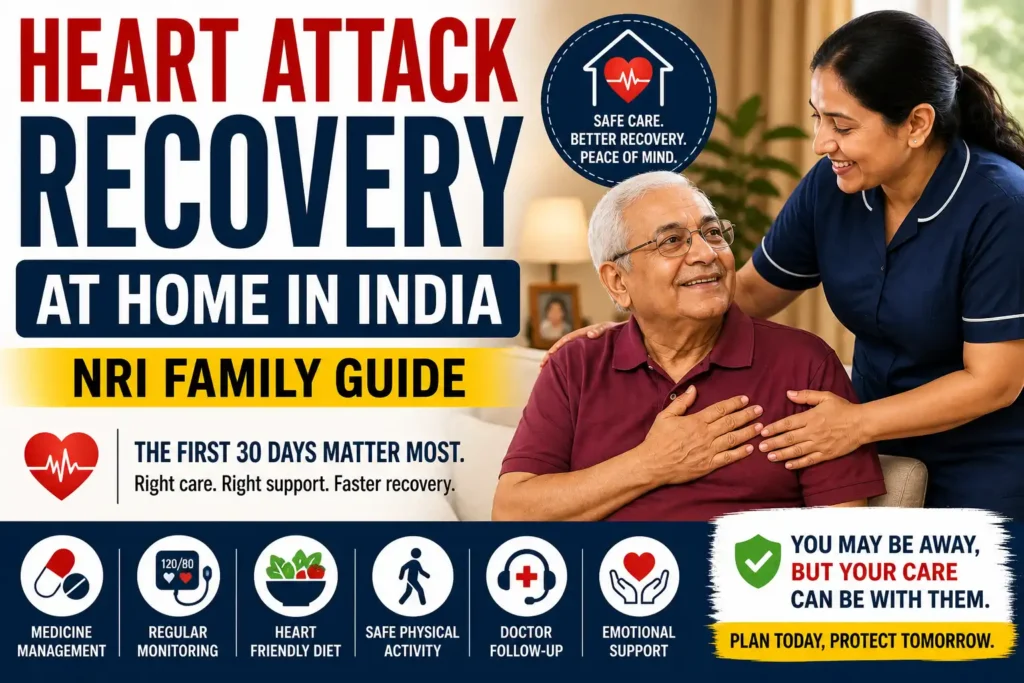
Heart Attack Recovery at Home in India
Blogs

Heart Attack Recovery at Home in India: A Practical Guide for NRI Families

Your Parent Is Finally Home… But The Real Recovery Starts Now The hospital phase is over. Doctors have completed the treatment. Family members feel relieved. Everyone says things are “stable.” But if your parent has recently returned home after a heart attack, this is the stage where proper care becomes extremely important. And for NRIs living abroad, this period can feel emotionally exhausting. You may be sitting thousands of miles away trying to manage: doctor calls, medicines, follow-up appointments, caregivers, and your parents’ emotional health, all from another country. At Friends of NRI, this is one of the most common situations families reach out for help with. Because the truth is simple: A successful hospital treatment is only the first step. Recovery at home is what truly determines how safely and comfortably your parent heals. Why The First Few Weeks Matter So Much After a heart attack, the heart becomes weaker and needs time to recover properly. During the first month after discharge, patients are more vulnerable to: weakness, breathing problems, irregular heartbeat, anxiety, or even another cardiac episode. This does not mean families should panic. But it does mean recovery should be taken seriously. One thing Friends of NRI notices often is that many elderly parents in India try to “act normal” too quickly. They may: hide discomfort, skip medicines, refuse help, or return to daily routines before the body is ready. That is where proper home support becomes important. What Heart Attack Recovery At Home Actually Looks Like Recovery is not just “bed rest.” A proper recovery routine usually includes: medication management, blood pressure monitoring, healthy meals, safe physical activity, emotional support, regular doctor follow-ups, and emergency planning. Many NRIs assume relatives nearby will manage everything. Sometimes they can. Sometimes they cannot. That’s why many families now arrange structured support through services like Friends of NRI, especially when parents live alone or children are overseas. Step 1: Create A Safe Recovery Environment The first thing your parent needs is a calm and safe space at home. Small changes make a big difference: easy access to washroom, comfortable sleeping arrangement, less climbing stairs, proper ventilation, minimal physical strain. At Friends of NRI, families often ask us to help coordinate these arrangements before hospital discharge so recovery starts smoothly from day one. Step 2: Medicines Must Be Managed Properly This is one of the biggest challenges after a heart attack. Patients are usually prescribed multiple medicines: blood thinners, cholesterol medication, BP medicines, diabetes medication, and emergency tablets if required. Missing even a few doses can create serious risks. That’s why medicine routines should never be casual. Many NRI families now use: pill organizers, phone reminders, daily nurse visits, or caregiver supervision. Friends of NRI also helps families coordinate medicine tracking and local support for elderly parents recovering alone. Step 3: Daily Monitoring Is Extremely Important Recovery should be monitored consistently, especially during the first few weeks. Families should regularly track: blood pressure, oxygen level, pulse rate, sugar levels, and unusual symptoms. If parents suddenly experience: chest discomfort, shortness of breath, dizziness, or swelling, medical attention should never be delayed. One thing many NRIs appreciate about Friends of NRI is having someone physically present who can notice early warning signs before they become emergencies. Step 4: Food Habits Usually Need To Change After a cardiac event, diet becomes part of the treatment. Doctors usually recommend: less salt, low oil food, lighter meals, more vegetables, better hydration. For many Indian households, this adjustment can be difficult at first. Parents often miss traditional foods they’ve eaten for years. The goal is not extreme dieting. The goal is sustainable, heart-friendly eating habits. Step 5: Emotional Recovery Is Real Too This part is often ignored completely. After a heart attack, many elderly people become: emotionally sensitive, anxious, fearful, or mentally exhausted. And when children live abroad, loneliness can affect recovery even more. Simple things help: regular video calls, family conversations, emotional reassurance, daily companionship. At Friends of NRI, families often tell us the biggest relief is knowing someone is checking in on their parents regularly, not just medically, but emotionally too. Step 6: Physical Activity Must Return Slowly One common mistake families make is either: forcing too much activity, OR keeping the patient completely inactive. Both are harmful. Most doctors recommend: short walks, gentle movement, and gradual recovery routines. Heavy lifting, stress, and overexertion should usually be avoided initially. Recovery should happen step-by-step. When Should NRIs Arrange Professional Help? Not every family situation is the same. But professional support becomes important when: parents live alone, family members are abroad, recovery is complicated, regular monitoring is required, or elderly parents struggle with mobility. Friends of NRI helps families coordinate: home care support, medical assistance, hospital visits, emergency coordination, caregiver arrangements, and elderly care services across India. For many NRIs, this creates peace of mind that relatives alone sometimes cannot provide consistently. Common Mistakes Families Make After A Heart Attack Ignoring Follow-Ups Recovery does not end after hospital discharge. Doctor appointments matter. Leaving Parents Alone Too Soon Even strong parents may struggle privately after a major health event. Choosing Cheap Unverified Care Services Experience and trust matter during medical recovery. Assuming “Everything Is Fine” Elderly patients often hide discomfort to avoid worrying family members. How Long Does Recovery Usually Take? Every patient recovers differently. But generally: initial recovery may take several weeks, full recovery can take several months. Recovery depends on: age, overall health, lifestyle, emotional support, and consistency of care. How Friends of NRI Supports Families During Recovery At Friends of NRI, we understand how difficult it feels to manage a parent’s recovery from another country. Families contact us because they want: reliable local support, trusted coordination, regular updates, and peace of mind. We help NRIs with: recovery support coordination, elderly care assistance, medical appointment support, home visit arrangements, caregiver coordination, and emergency response assistance. Most importantly, we help families feel less helpless during a stressful time. Frequently Asked Questions Can heart patients recover properly

Scroll to Top
Call Now Button