

NRI Real Estate

NRI investment property in India
Blogs, NRI Property & Real Estate

Buying an Investment Property in India as an NRI: What to Check Before You Invest

Buying property in India while living abroad can look simple on paper. You find a property. You like the location. The numbers look attractive. The builder gives you a payment schedule. You make the investment. But for an NRI, buying a property in India is rarely just about finding the right apartment or plot. There are documents to verify, rules to understand, money to transfer, taxes to consider and, perhaps most importantly, someone has to look after the property once the purchase is complete. That last part is often overlooked. You may buy a beautiful apartment in India while living in Dubai, London, Toronto or Singapore. But who will inspect it when you are away? Who will deal with a maintenance issue? Who will coordinate with a tenant? Who will be there if something needs immediate attention? This is why Property Management Services in India should be considered as part of the investment plan—not only after you have bought the property. First, Understand What You Can Buy Before looking at locations or comparing builders, understand the basic rules that apply to NRIs. Under FEMA rules, an NRI can generally purchase immovable property in India, except agricultural land, plantation property and a farmhouse, subject to the applicable regulations. Payment for eligible purchases can generally be made through permitted banking channels, including inward remittance or eligible NRE, NRO or FCNR(B) accounts. That doesn’t mean every property transaction is identical. Your citizenship, residential status, type of property, source of funds and intended use can affect the transaction. If you are unsure about your eligibility or the structure of a purchase, speak to a qualified legal or tax professional before making a commitment. Don’t Buy the Property Before Checking the Property A good location and attractive interiors don’t tell you whether the property is actually a good purchase. Before paying a substantial amount, look beyond the brochure. Check the property’s ownership history and title documents. Verify whether there are existing claims, loans, disputes or other encumbrances. For a new project, look at the developer’s track record and the project’s applicable registrations and approvals. For a resale property, the checks become even more important. You should also understand: Who legally owns the property? Are the title documents in order? Are applicable property taxes paid? Are society or maintenance dues outstanding? Are there existing loans or charges? Are required approvals available? Does the actual property match the documents? An NRI living abroad should be especially careful here because visiting India repeatedly to resolve a documentation problem can be difficult. Location Matters More Than the Showroom Developers are good at showing you what a property could look like. Your job is to understand what life around that property will actually be like. Visit—or have someone you trust visit—the neighbourhood. Look at the surrounding roads, public transport, schools, hospitals, markets and basic infrastructure. Also ask a less glamorous but very important question: What happens to this property when you are not in India? A property in a convenient location is generally easier to inspect, maintain, rent and manage than one that is difficult to access. For an NRI investor, that practical difference matters. Think About the Property’s Purpose Before Buying Why are you buying? That question should come before the question of which property you like. You may be buying for: Rental income: Then tenant demand, connectivity and the local rental market matter. Long-term investment: Then location, development plans and the property’s overall suitability for your investment horizon become important. A future home: Then your priorities may be different. Community, healthcare, accessibility and proximity to family may matter more than rental yield. Parents or family: Then convenience, safety and access to hospitals and everyday facilities become particularly important. A property that is excellent for one purpose may not make sense for another. Calculate the Cost Beyond the Property Price The price quoted by the seller is only one part of your investment. There may also be costs related to registration, stamp duty, taxes, brokerage, legal verification, maintenance, furnishing, repairs and property management. If you are buying a property that will be rented out, also consider periods when it may remain vacant and the cost of maintaining it between tenants. This is where many first-time investors make a mistake. They calculate the purchase price and expected rent—but forget the costs of actually owning the property. Before investing, create a realistic ownership budget. Understand the Tax Side Before You Sign Tax treatment can become complicated for NRIs, particularly when a property is rented out or eventually sold. For 2026, India’s tax framework has also transitioned to the Income Tax Act, 2025 for relevant transactions from 1 April 2026. The Income Tax Department says TDS provisions previously spread across several sections have been reorganised under Section 393 of the new Act. If you are buying, renting or eventually selling property, don’t rely on an old blog or a friend’s experience from several years ago. Tax rules can depend on the nature of the transaction, the parties involved, the amount and the timing. Get advice from a qualified tax professional for your specific situation. Think About What Happens After You Buy This is where the conversation usually changes. Before buying, everyone is focused on the property. After buying, the questions begin. Who will collect the keys? Who will inspect the apartment? Who will handle repairs? Who will speak to the society? Who will meet a tenant? Who will supervise painting or plumbing work? Who will check the property if it stays vacant for six months? For someone living in India, these may be small tasks. For an NRI, each one can involve multiple calls, emails and time-zone problems. This is where professional Property Management Services in India can become useful. Why Property Management Matters for NRI Investors Buying an investment property is only the beginning. A property has to be maintained if you want to protect its condition and make ownership easier over the long term. Regular inspections can help identify
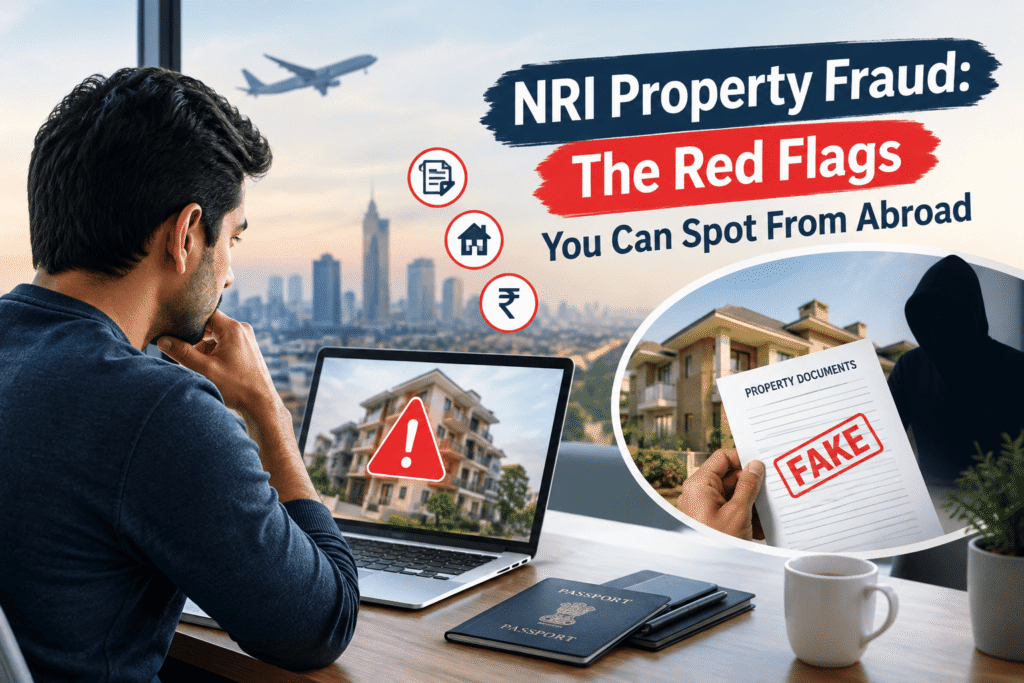
NRI Property Fraud: The Red Flags You Can Spot From Abroad
NRI Property Management

NRI Property Fraud: The Red Flags You Can Spot From Abroad

Owning a property in India can be a valuable asset for an NRI. It can be a family home, an inherited property, a rental investment, or a house bought for the future. But managing that property while living thousands of kilometers away can also bring serious challenges. One of the biggest concerns for NRIs is property fraud. When you are living abroad, you may not be able to visit your property regularly, meet tenants personally, check documents yourself, or keep an eye on every transaction. Fraudsters and dishonest intermediaries can take advantage of this distance. The good news is that many property frauds show warning signs before they become a major financial loss. Knowing what to look for can help NRIs protect their property and make better decisions. Why Are NRIs More Vulnerable to Property Fraud? Distance is one of the biggest problems. An NRI may own a flat in Delhi, a house in Punjab, land in Haryana, or an inherited property in another part of India. If the owner lives in the US, UK, Canada, Australia, or another country, regular physical checks become difficult. Sometimes, an NRI depends completely on a relative, property agent, tenant, caretaker, or another local person. This does not mean that every local representative is unreliable. Many people manage properties responsibly. However, an owner should still have proper records, clear communication, and independent verification. A property should never be managed only on trust. Red Flag 1: Someone Avoids Showing Original Property Documents One of the first warning signs is when someone keeps giving excuses about property papers. An NRI should know where important documents are kept and who has access to them. Depending on the property and transaction, these may include the sale deed, title documents, tax receipts, registration records, society records, and other relevant paperwork. If someone says, “Everything is fine, you don’t need to check,” that should not be ignored. Before making any major property decision, documents should be checked through appropriate legal and official channels. Red Flag 2: Unexplained Changes in Ownership or Records Unexpected changes in property records can be a serious warning sign. For example, an NRI may suddenly discover that a property record contains unfamiliar information, a new person is claiming an interest in the property, or someone has started dealing with the property without the owner’s knowledge. If something does not match your previous records, investigate it immediately. Do not depend only on a phone call or verbal explanation. Ask for documents and verify information independently. Red Flag 3: Pressure to Sign a Power of Attorney A Power of Attorney can be useful when an NRI cannot personally handle property-related work in India. But giving broad authority to another person without understanding its scope can create serious problems. Be careful if someone pressures you to sign quickly or tells you that a general Power of Attorney is required for every small property task. Before signing, understand exactly: Who is receiving the authority? What actions can that person take? Is the authority limited to a particular property? Can the person sell, transfer, lease, or mortgage the property? How and when can the authority be cancelled? For important transactions, getting independent legal advice is sensible. Red Flag 4: Rent Is Not Reaching Your Account Rental income is another area where problems can remain hidden for a long time. Suppose your property is rented out, but the rent suddenly becomes irregular. You may be told that the tenant has not paid, the property is vacant, or maintenance expenses have increased. One missed payment may have a genuine reason. But repeated unexplained deductions or missing rent should be investigated. NRIs should maintain a clear record of rent received, expenses paid, maintenance work, and communication with the tenant or property representative. Red Flag 5: Someone Refuses Property Inspection A simple property inspection can reveal problems that photographs or phone calls cannot. Be cautious if the person managing your property repeatedly refuses to arrange an inspection or keeps postponing a visit. A property can develop issues such as water leakage, structural damage, unauthorised occupation, poor maintenance, or changes made without permission. Regular physical inspection becomes especially important when the owner lives abroad. This is one reason professional Nri property management in india can be useful for owners who cannot personally visit their property regularly. Red Flag 6: Unusually Low Property Valuation Another warning sign is an unexpectedly low valuation. Imagine an NRI wants to sell a property and an agent immediately says that the property is worth far less than expected. The agent then pushes for a quick sale. Before accepting such a valuation, compare information from multiple credible sources and consider getting an independent property valuation. Do not make a major financial decision based on one person’s opinion. At the same time, remember that property prices can vary significantly depending on location, condition, title status, market demand, and other factors. A low valuation is a reason to investigate, not automatic proof of fraud. Red Flag 7: Cash Transactions and Poor Records Large property-related payments should never be handled casually. If someone insists on unexplained cash payments, refuses to provide receipts, or avoids written records, treat it as a serious warning sign. Keep agreements, receipts, bank records, maintenance bills, tax documents, and other important paperwork safely organised. Good documentation can become extremely important if a dispute occurs later. Red Flag 8: A Tenant or Occupant Suddenly Changes Sometimes an NRI may believe that a trusted tenant is living in the property, only to discover later that another person is occupying it. This can happen when a tenant sublets the property without permission or when arrangements are made without the owner’s knowledge. A proper rental agreement, tenant verification where applicable, regular communication, and periodic inspection can help reduce this risk. How NRIs Can Protect Their Property From Abroad Property protection does not require an owner to be physically present every week. It requires proper planning. Start by keeping all important property documents organised. Maintain

Scroll to Top
Call Now Button