
nri services in india

NRI property maintenance
Blogs, NRI Property Management

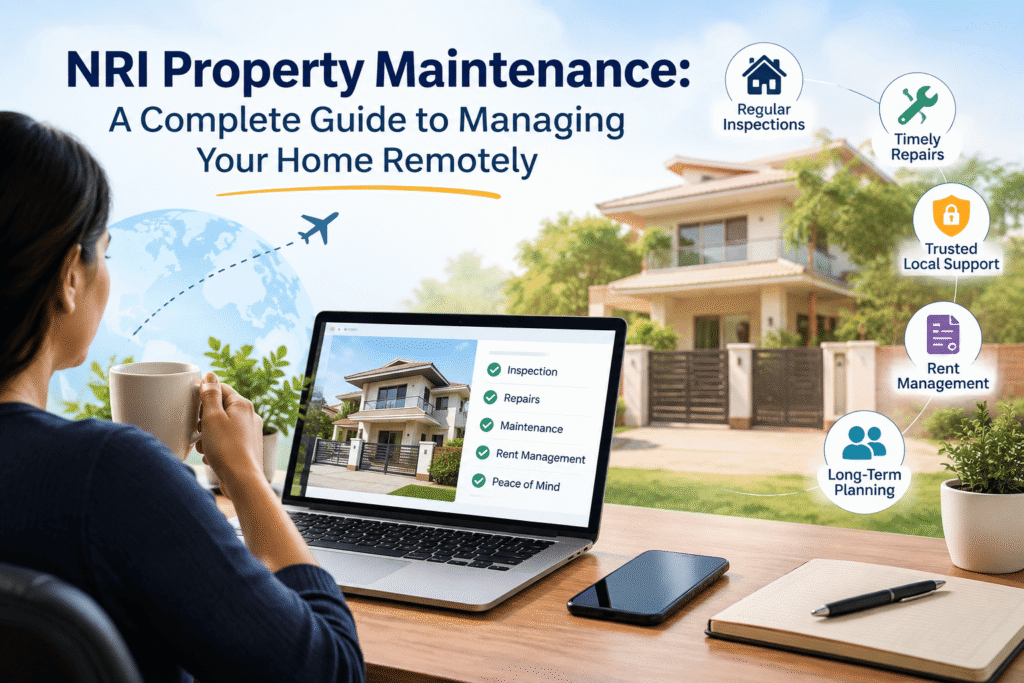
NRI Property Maintenance: A Complete Guide to Managing Your Home Remotely

Living abroad can give you opportunities, a career and a different life. But when your home, parents or other responsibilities are still in India, distance can sometimes make simple things surprisingly difficult. A leaking tap. A tenant who has stopped responding. A house that has been locked for months. A repair that needs someone to visit the property. Your parents needing a doctor’s appointment while you are sitting in another time zone. None of these problems are unusual. The difficult part is being there when they happen. For many NRIs, managing life in India is not about one big problem. It is about dozens of small things that need attention at the right time. This is where NRI Services in India can make a real difference. Friends of NRI helps bridge that distance by providing local support for NRIs who need someone dependable to coordinate property, maintenance, elderly care, medical requirements and other day-to-day needs in India. Your Property Doesn’t Stop Needing Attention When You Leave India Buying a home in India is often an emotional decision for an NRI. It may be the family home where you grew up. It may be a property bought for your parents. It may be an investment for the future. Or perhaps it is the home you plan to return to one day. Whatever the reason, the property still needs attention. The problem starts when nobody is regularly checking it. A small seepage can turn into damaged walls. A faulty appliance can become a bigger repair. A vacant property can collect dust, develop pest problems or simply deteriorate because nobody is checking it. If there is a tenant, there are different concerns—rent, maintenance requests, repairs, inspections, documentation and handover. When you are abroad, even a simple repair can become a long chain of phone calls. Someone needs to visit the property. Someone needs to understand the problem. Someone needs to find a reliable technician. Someone needs to check the work. And someone needs to keep you updated. That is the real challenge of managing property remotely. Regular Property Checks Can Prevent Bigger Problems One of the simplest things an NRI can do is make property inspection a routine rather than an emergency activity. You don’t necessarily need someone visiting every day. But the property should not remain completely unchecked for long periods either. A proper inspection can cover things such as: Plumbing and water leakage Electrical fittings Doors, windows and locks Dampness and seepage Pest activity Appliances Air-conditioning General cleanliness Furniture and fittings Security concerns The important thing is what happens after the inspection. A useful update should tell you what was found, what needs attention, what can wait and what the estimated cost may be. For an NRI sitting overseas, photographs and videos can make these updates much easier to understand. Instead of hearing, “There is some leakage,” you can actually see where the leakage is and decide what you want to do. Don’t Make Your Parents Your Property Manager This is something many NRIs do without realising it. Their parents live in the same city, so whenever something needs to be repaired, they are asked to handle it. At first, it may seem convenient. But over time, the list grows. “Please meet the plumber.” “Please collect the documents.” “Please check the flat.” “Please speak to the tenant.” “Please go to the society office.” For elderly parents, these responsibilities can become tiring. And sometimes the situation is the other way around. The NRI is already worried about their parents, while also trying to manage a property from another country. This is one reason professional Elderly Care Services in India and property support can become valuable for families living abroad. The goal is not to replace family. It is to make sure family members don’t have to carry every responsibility themselves. Looking After Parents Is About More Than Medical Emergencies When people hear “elderly care”, they often think only about illness or hospital visits. But real life is usually much simpler. It can be helping an elderly parent get to a doctor’s appointment. It can be arranging a medical test. It can be making sure medicines are available. It can be checking whether they are doing okay after a hospital visit. Sometimes, it is simply having someone nearby who can visit them when their children cannot. For an NRI, this can provide something that phone calls cannot: a physical presence in India. Recent reporting on elder care in India also highlights how families living abroad increasingly look for support that goes beyond medical care, including companionship, home visits, daily assistance and coordination with healthcare providers. Medical Support When You Are Miles Away Imagine your mother has a routine medical appointment. You can book the appointment from abroad. But who will accompany her? Who will arrange transport? Who will help her reach the hospital? Who will collect the reports? Who will explain what needs to happen next? Of course, every family situation is different, and medical decisions should always remain with the patient and qualified healthcare professionals. But the practical coordination around healthcare can still be difficult for families living abroad. This is where medical support for NRIs can be useful. Friends of NRI can help coordinate relevant local requirements so that an NRI does not have to manage every small logistical detail from another country. Property and Parents Are Often Connected For many NRIs, property and elderly care are not two separate subjects. They are connected. The house may belong to the parents. The parents may be living in the property. The NRI may be paying for repairs and household expenses. The same person may need to coordinate the plumber, electrician, doctor, driver and other local requirements. This is why an NRI often needs more than a property manager. They need one dependable local support system. Someone who understands that the house is not just an asset. It is somebody’s home. What Does a Good NRI Support Service Actually Do? The answer


NRI Property Fraud: The Red Flags You Can Spot From Abroad
NRI Property Management

NRI Property Fraud: The Red Flags You Can Spot From Abroad

Owning a property in India can be a valuable asset for an NRI. It can be a family home, an inherited property, a rental investment, or a house bought for the future. But managing that property while living thousands of kilometers away can also bring serious challenges. One of the biggest concerns for NRIs is property fraud. When you are living abroad, you may not be able to visit your property regularly, meet tenants personally, check documents yourself, or keep an eye on every transaction. Fraudsters and dishonest intermediaries can take advantage of this distance. The good news is that many property frauds show warning signs before they become a major financial loss. Knowing what to look for can help NRIs protect their property and make better decisions. Why Are NRIs More Vulnerable to Property Fraud? Distance is one of the biggest problems. An NRI may own a flat in Delhi, a house in Punjab, land in Haryana, or an inherited property in another part of India. If the owner lives in the US, UK, Canada, Australia, or another country, regular physical checks become difficult. Sometimes, an NRI depends completely on a relative, property agent, tenant, caretaker, or another local person. This does not mean that every local representative is unreliable. Many people manage properties responsibly. However, an owner should still have proper records, clear communication, and independent verification. A property should never be managed only on trust. Red Flag 1: Someone Avoids Showing Original Property Documents One of the first warning signs is when someone keeps giving excuses about property papers. An NRI should know where important documents are kept and who has access to them. Depending on the property and transaction, these may include the sale deed, title documents, tax receipts, registration records, society records, and other relevant paperwork. If someone says, “Everything is fine, you don’t need to check,” that should not be ignored. Before making any major property decision, documents should be checked through appropriate legal and official channels. Red Flag 2: Unexplained Changes in Ownership or Records Unexpected changes in property records can be a serious warning sign. For example, an NRI may suddenly discover that a property record contains unfamiliar information, a new person is claiming an interest in the property, or someone has started dealing with the property without the owner’s knowledge. If something does not match your previous records, investigate it immediately. Do not depend only on a phone call or verbal explanation. Ask for documents and verify information independently. Red Flag 3: Pressure to Sign a Power of Attorney A Power of Attorney can be useful when an NRI cannot personally handle property-related work in India. But giving broad authority to another person without understanding its scope can create serious problems. Be careful if someone pressures you to sign quickly or tells you that a general Power of Attorney is required for every small property task. Before signing, understand exactly: Who is receiving the authority? What actions can that person take? Is the authority limited to a particular property? Can the person sell, transfer, lease, or mortgage the property? How and when can the authority be cancelled? For important transactions, getting independent legal advice is sensible. Red Flag 4: Rent Is Not Reaching Your Account Rental income is another area where problems can remain hidden for a long time. Suppose your property is rented out, but the rent suddenly becomes irregular. You may be told that the tenant has not paid, the property is vacant, or maintenance expenses have increased. One missed payment may have a genuine reason. But repeated unexplained deductions or missing rent should be investigated. NRIs should maintain a clear record of rent received, expenses paid, maintenance work, and communication with the tenant or property representative. Red Flag 5: Someone Refuses Property Inspection A simple property inspection can reveal problems that photographs or phone calls cannot. Be cautious if the person managing your property repeatedly refuses to arrange an inspection or keeps postponing a visit. A property can develop issues such as water leakage, structural damage, unauthorised occupation, poor maintenance, or changes made without permission. Regular physical inspection becomes especially important when the owner lives abroad. This is one reason professional Nri property management in india can be useful for owners who cannot personally visit their property regularly. Red Flag 6: Unusually Low Property Valuation Another warning sign is an unexpectedly low valuation. Imagine an NRI wants to sell a property and an agent immediately says that the property is worth far less than expected. The agent then pushes for a quick sale. Before accepting such a valuation, compare information from multiple credible sources and consider getting an independent property valuation. Do not make a major financial decision based on one person’s opinion. At the same time, remember that property prices can vary significantly depending on location, condition, title status, market demand, and other factors. A low valuation is a reason to investigate, not automatic proof of fraud. Red Flag 7: Cash Transactions and Poor Records Large property-related payments should never be handled casually. If someone insists on unexplained cash payments, refuses to provide receipts, or avoids written records, treat it as a serious warning sign. Keep agreements, receipts, bank records, maintenance bills, tax documents, and other important paperwork safely organised. Good documentation can become extremely important if a dispute occurs later. Red Flag 8: A Tenant or Occupant Suddenly Changes Sometimes an NRI may believe that a trusted tenant is living in the property, only to discover later that another person is occupying it. This can happen when a tenant sublets the property without permission or when arrangements are made without the owner’s knowledge. A proper rental agreement, tenant verification where applicable, regular communication, and periodic inspection can help reduce this risk. How NRIs Can Protect Their Property From Abroad Property protection does not require an owner to be physically present every week. It requires proper planning. Start by keeping all important property documents organised. Maintain

Blogs

Your Tenant Just Stopped Paying Rent. Now What?

It’s 11 PM in New Jersey, which means it’s morning in India. Your phone buzzes. It’s the neighbor, not the tenant. “Beta, I haven’t seen anyone at your flat in three weeks. The society office says rent hasn’t been paid since April.” You open your email. Somewhere there, buried under twelve other things, is a rental agreement you signed four years ago on a trip home. You don’t remember what it says. You’re not even sure where the physical copy is. This is the moment most NRIs dread, not because the property is worth so much, but because you’re suddenly negotiating with a stranger, from another continent, with a document you barely remember drafting. A good rental agreement is the difference between a five-minute phone call to your property manager and a six-month legal mess involving a lawyer you’ve never met, in a court you can’t attend, for a case you don’t fully understand. At Friends of NRI, this is a call we’ve been on more times than we can count. Different cities, different tenants, same panic. So, let’s walk through exactly what we tell families in this situation, in plain language, without the legal jargon that makes most articles on this topic harder to read than the agreement itself. Can I make a rental agreement myself? Technically, yes. There’s no law that says you need a lawyer to draft a rental agreement in India. You can write one yourself, print it on stamp paper, get it signed by both parties and two witnesses, and it’s considered a valid contract. But “you can” and “you should” are different things when you’re not the one who’ll be around to sort out a mistake. A rental agreement drafted casually, copied from a template someone forwarded on WhatsApp, often misses the details that protect you. Things like: • What happens if the tenant sublets the property without telling you. • Who pays for repairs beyond normal wear and tears? • The exact notice period for eviction, and what counts as valid notice. • What happens to the security deposit if there’s a dispute over damage? • A clear clause on rent escalation, so you’re not stuck at the same rate for three years while maintenance costs climb. If you’re managing this from abroad, every one of these gaps becomes a problem you must solve long distance, usually while you’re also trying to hold down a job and manage your own life on the other side of the world. This is one of the most common things we get asked to fix at Friends of NRI: not a broken agreement, but a vague one that never accounted for the fact that the owner wouldn’t be around to interpret it. A well-drafted agreement doesn’t just protect the property. It protects your time, your peace of mind, and the sleep you lose worrying about it. Can I create my own tenancy agreement, or should I register for it? Here’s where the confusion usually starts, and it’s worth clearing up properly because it affects how much protection you have. In India, rental agreements for a tenure of 11 months or less don’t legally require registration with the Sub Registrar’s office. This is exactly why most Indian rental agreements are written for 11 months and simply renewed. It saves the parties a trip to the registrar and the associated registration fees. Agreements for a longer tenure, however, are a different story. Under the Registration Act, leases beyond one year generally need to be registered to carry full legal weight. Some states are stricter about this than others. Maharashtra, for instance, mandates registration for rental agreements regardless of tenure, and landlords who skip it can face real penalties. Karnataka, on the other hand, has no practical online registration process, so a properly notarized and stamped agreement is what courts and banks in Bangalore typically accept. The point is that the rules aren’t identical across India. Where your property sits changes what “doing it right” means. This is one of the quiet reasons NRIs get caught off guard: an agreement that was perfectly fine for a flat in Bangalore might not hold up the same way for a property in Pune. It’s also why our team drafts differently depending on the city, not just the tenant. Is a notarized rent agreement valid in court? Yes, but with a condition that matters more than most people realize. A notarized agreement is admissible as evidence in court. The notary’s job is simply to confirm that the people who signed the document are who they say they are, and that the signatures are genuine. That’s it. The notary isn’t checking whether your clauses are fair, whether the rent escalation is legal, or whether the eviction terms will hold up if challenged. A registered agreement carries more legal standing. It’s recorded with the government, harder to dispute, and generally what courts lean on first when there’s a serious disagreement over eviction, unpaid rent, or damage to the property. If your case ever moves beyond a polite conversation, a registered agreement gives you a much stronger footing than a notarized one. So, think about it this way. Notarization is useful and often sufficient for short term, lower stakes tenancies. Registration is what you want when the property matters: when there’s real money at stake, when the tenancy is longer, or when you simply won’t be around handling things if something goes wrong. For most NRIs managing a family home or an investment property from abroad, that second category describes almost every situation, which is why we default to registration unless there’s a good reason not to. Does an NRI have to pay tax on rental income in India? Yes, and this one catch people off guard almost every time. If you own property in India and rent it out, that rental income is taxable in India, regardless of where you live or where you pay tax on your salary. The tenant is legally required

Blogs

Real Problems Faced by NRIs That Nobody Talks About

Living abroad is often seen as a dream life filled with better opportunities, financial stability, and a successful future. While many NRIs achieve professional success, there are several hidden struggles behind this lifestyle that people rarely discuss openly. From worrying about elderly parents in India to handling property disputes and emotional stress, NRIs face many challenges that quietly affect their personal and professional lives. This article explores the real problems faced by NRIs that nobody talks about and why having trusted support in India has become more important than ever. 1. Constant Worry About Parents Living Alone One of the biggest emotional struggles for NRIs is being away from aging parents. Many senior citizens in India live alone while their children settle abroad for work or business. Even a small health issue or emergency call can create stress and helplessness. Common concerns include: Medical emergencies Loneliness Safety issues Difficulty managing daily activities Emotional isolation This is why many families now look for: Elder care services in India Medical assistance for NRIs Emergency support services Regular health monitoring and trusted caregivers help reduce stress for families living overseas. 2. Property Problems in India Property management is another major issue faced by NRIs. Many people invest in homes, land, or rental properties in India but struggle to manage them from abroad. Common property-related problems include: Illegal property possession Tenant disputes Delayed maintenance Fraudulent transactions Lack of trustworthy supervision Managing property remotely can become emotionally and financially exhausting. This is why services like: NRI property management services Home maintenance services India Property verification support have become increasingly important. 3. Emotional Stress and Guilt Many NRIs silently deal with emotional pressure. While they may have career growth abroad, they often miss: Family functions Festivals Important family moments Time with parents Personal relationships Over time, this creates emotional guilt and stress. Many NRIs feel torn between: Career responsibilities abroad Family responsibilities in India This emotional struggle is rarely discussed openly, but it affects mental peace significantly. 4. Difficulty Handling Emergencies in India Emergencies become much harder when someone lives in another country. Situations like: Sudden hospitalization Accidents Legal problems Property disputes Family emergencies can create panic because NRIs cannot immediately travel to India. In such cases, reliable: Emergency support services Medical coordination services Trusted local assistance become extremely valuable. 5. Trust Issues While Managing Things Remotely Trust is one of the biggest concerns for NRIs. Whether it is: Hiring caretakers Managing property Handling legal paperwork Supervising home repairs many NRIs struggle to find trustworthy people. Unfortunately, fraud and mismanagement cases are common when things are handled remotely without proper supervision. This is why verified support services and professional assistance are becoming essential for overseas families. 6. Healthcare Challenges for Elderly Parents Healthcare management for parents living in India becomes difficult for NRIs. Common concerns include: Doctor appointments Regular health checkups Medicine management Emergency hospitalization Post-surgery care Without local support, even small medical issues can become stressful. Professional healthcare coordination and home nursing services help families stay informed and prepared. 7. Legal and Documentation Problems Legal work in India can become complicated for NRIs. Common issues include: Property paperwork Power of attorney complications Bank documentation Tax filing Inheritance disputes Managing these tasks from abroad often leads to delays and confusion. Reliable legal assistance and documentation support help reduce these challenges. 8. Feeling Disconnected From FamilyOver time, many NRIs feel emotionally distant from their roots. Busy schedules, time zone differences, and long-distance relationships create gaps in communication. Many people miss: Cultural celebrations Family bonding Daily interactions Emotional support systems This feeling of disconnect is one of the most personal struggles faced by overseas Indians. 9. Financial Pressure Despite Higher Income People often assume NRIs live stress-free lives because of higher salaries abroad. However, many NRIs manage: High living expenses Family support in India Loans Investments Children’s education Healthcare expenses Balancing financial responsibilities in two countries can become challenging.10. Lack of Reliable Support Systems in India Many NRIs struggle because they do not have dependable local support in India. Whether it is: Family emergencies Property supervision Hospital coordination Elder care Home management having trusted assistance can make a huge difference. Professional support services help families stay connected, informed, and stress-free even while living abroad. Why Trusted NRI Support Services Matter Today Modern NRI families need reliable solutions that provide: Transparency Communication Emergency support Verified professionals Family assistance Property supervision Having trusted local support not only reduces stress but also helps families protect their loved ones and assets in India. Frequently Asked Questions What are the biggest problems faced by NRIs? The most common problems include property disputes, elderly parent care, emotional stress, legal issues, healthcare emergencies, and trust-related concerns. Why do NRIs need support services in India? Support services help NRIs manage family responsibilities, property, healthcare, and emergencies remotely. How can NRIs manage elderly parents in India? Professional elder care services, healthcare coordination, and emergency support systems can help families manage parents effectively. Are property problems common for NRIs? Yes, many NRIs face property fraud, tenant disputes, and maintenance issues because they manage properties remotely. Final Thoughts Behind the success stories of NRIs, there are many emotional, financial, and personal struggles that people rarely notice. Managing responsibilities across countries is not easy. From caring for elderly parents to protecting property and handling emergencies, NRIs often carry constant stress while trying to balance work and family life. Having trusted support systems in India Friend of Nri  can help reduce these challenges and provide peace of mind for families living abroad.

How to Manage Indian Functions from Abroad Easily
Blogs

How to Manage Indian Functions from Abroad (Stress-Free Guide)

In India, celebrations and functions have to have a sense of grandeur. Be it a wedding, anniversary, retirement party, birthday, or a religious ceremony, we celebrate it with splendor. Planning and managing a celebration is a hassle in itself; add in time zone differences, and you are bombarded with vendor coordinations, endless phone calls, and family expectations. This meansno enjoyment for you. Managing an Indian function is stressful, and hence most NRIs find themselves looking for NRI Services in India. Whether it’s a wedding, your parents’ anniversary, a housewarming ceremony, or a religious event, handling everything while being miles apart requires careful planning and trusted local support. In these situations, you can trust companies like Friends of NRI, which promise to deliver exceptional services without you having to be hands-on.   Why Managing Indian Functions from Abroad Feels Challenging Unlike small gatherings abroad, Indian functions are known for being grand, emotional, and full of transitions. Unlike gatherings abroad, functions in India have huge guest lists, traditional rituals, multiple vendors, catering logistics, venue management, and the list goes on… For NRIs, these challenges become even more troublesome because of Time Zone Differences Lack of Local Presence Family Pressure Vendor Reliability Issues Unexpected Emergencies And Much More This is why many NRIs today prefer professional assistance and reliable NRI Services in India to manage functions smoothly. This blog includes a Step-by-step guide to managing functions in India from abroad: Step-by-Step Guide to Managing Indian Functions Stress-Free 1. Start Planning Early The earlier you begin, the better. Many NRIs make the mistake of waiting till the very last minute to start planning. This causes the end moment struggles, and things do not turn out perfectly. For large events like weddings, planning 6-12 months in advance is recommended, whereas smaller functions may require 3-5 months of preparation. Early planning helps you book better venues, the catering of your choice, get affordable prices, coordinated family schedules, and everything as per YOUR liking. Start by creating a detailed checklist including all the necessary things to do, such as venue bookings, guest lists, catering, invitations, travel, accommodations, etc. 2. Choose a Reliable Local Support Team One of the smartest decisions one can make is finding a reliable local support team who take charge and helps out. Most NRIs start with searching for NRI Services in India, but end up connecting with a variety of companies and brands that are either not reliable enough or fraudulent. Instead, first, try to find locals such as relatives or family members, friends, neighbours, etc. Professional NRI Services in India can include A to Z event planning and coordination from venue bookings to making the event a success. Companies like Friends of NRI are one of the most reliable and efficient companies offering all the services for NRIs at great prices. Having reliable people on the ground significantly reduces stress and ensures better execution. 3. Set a Clear Budget Indian functions can quickly become expensive and get out of budget without even realising it. Hence, it is advised to have a set budget, allocate funds categorically, keeping aside some emergency funds, and track every payment before making any bookings. A few other important things NRIs should keep an eye on are currency exchange rates, vendor advance payments, GST, local taxes, and finally international transaction charges. A structured budget helps avoid overspending and financial surprises later. 4. Use Technology For Remote Coordination Remote event planning has been made much easier than before, all with the help of technological advancements. You can manage Indian functions effectively through video calls, WhatsApp groups, shared documents, and online payment platforms, etc. Ask vendors to provide: Real-time updates Photos and videos Digital contracts Online invoices Progress reports Many event planners, as well as companies providing NRI Services in India, now offer virtual planning consultations specifically designed for NRIs. 5. Verify Vendors Properly One of the biggest concerns NRIs face is vendor fraud or low-quality services. Before hiring any vendors, it is extremely essential to check online reviews, ask for references, request portfolio samples, verify business registrations, conduct video meetings, and get a real contract done. Professional NRI Services in India often already have verified vendor networks, saving you time and reducing risk. 6. Simplify Guest Management Guest management is one of the most chaotic tasks of planning an event. Creating a digital guest management system that includes RSVPs, Travel Schedules, Accommodations, Dietary Preferences, etc., always helps and makes things easy. For larger functions, one can appoint specific coordinators who provideNRI Services in India that can manage specific tasks such as airport pickups, hotel check-ins, elderly guests, and VIP arrangements. 7. Arrange Accommodation & Transport in Advance When guests are arriving from multiple cities or locations, travel logistics become crucial. Making bookings early on helps secure better rates, ensures availability, and keeps guests close to the set venue. It is necessary to arrange airport transfers, local transport, shuttle busses etc especially for elderly guests and children. Many NRI Services in India providers handle end-to-end hospitality management for family events. 8. Keep Backup Plans Ready No matter how well you prepare, mess-ups happen! Hence, it is important that you keep backups ready. This could mean being ready in any situation, be it weather disruptions, vendor cancellations, technical issues, transportation delays, power outages, and/ or last-minute guest changes. Having a backup decorator, caterer, etc., is always a smart decision. 9. Hire Professional Event Managers for Large Functions While organising a large function, mistakes happen. Specifically, when it is being organised by someone who is not a pro at it, hiring a professional can be considered necessary. They literally take everything off your plate and do it themselves, so you can actually enjoy the function without stressing. From vendor coordination to timeline management, hospitality to crisis management, they can do it all! Several companies specializing in NRI Services in India offer personalized event management solutions tailored for overseas families. Common Indian Functions NRIs Manage From Abroad Frequently organized functions by NRIs include weddings, religious ceremonies, housewarming

How to Arrange Home Nurse for Parents in India
Blogs

How to Arrange Home Nurse for Parents in India (Complete NRI Guide 2026)

Arranging proper care for elderly parents in India while living abroad is one of the biggest concerns for Non-Resident Indians (NRIs). Medical emergencies, post-hospital care, and daily health support require trained professionals and this is where home nursing services in India become essential.  also Best Elderly Care Services in India If you are an NRI wondering how to arrange a home nurse for your parents in India safely and reliably, this guide will walk you through everything step-by-step. Why NRIs Need Home Nursing Services in India As parents age, they may require: Regular medical supervision Assistance with daily activities Post-surgery or hospital recovery care Chronic disease management Emergency support Managing this from overseas is difficult. Hiring a professional home nurse in India ensures your parents receive timely, safe, and professional care even when you are not physically present. What Does a Home Nurse Do? A trained home nurse provides medical and personal care at home. Key Responsibilities Include: Monitoring vital signs (BP, sugar levels, oxygen) Administering medications and injections Wound dressing and post-surgery care Assisting with mobility and daily routines Coordinating with doctors Providing emergency support Home nurses can be hired part-time, full-time, or 24/7, depending on the patient’s needs. Types of Home Nursing Services Available in India Understanding service types helps you choose the right option. 1. Basic Caregiver Support Help with daily activities Medication reminders Light support 2. Skilled Nursing Care Medical procedures Injections, IV, wound care Post-surgery recovery 3. ICU-Level Home Care Advanced medical equipment Continuous monitoring Critical patient care Step-by-Step: How to Arrange a Home Nurse in India Follow this practical process to ensure safe and reliable care. Step 1: Assess Your Parents’ Medical Needs Start by understanding: Current health condition Doctor’s recommendations Required level of care Duration (short-term or long-term) This helps in selecting the right type of nurse or caregiver. Step 2: Choose a Trusted Home Healthcare Provider Avoid hiring random individuals without verification. Instead, look for: Registered home healthcare companies Verified and trained staff Experience in elderly care Positive reviews or references Professional agencies provide background-verified nurses, which reduces risk. Step 3: Verify Qualifications and Experience Before finalizing: Check nurse certification Ask about experience with similar medical cases Confirm language compatibility (important for elderly comfort) Never skip verification — this is critical for safety. Step 4: Decide Duration and Timing Choose based on need: Hourly care → basic support Full-day nurse → regular monitoring 24/7 live-in nurse → serious medical conditions Discuss flexibility in case requirements change. Step 5: Understand Costs Clearly Costs depend on: Type of care Duration Medical complexity City location Approximate Cost Range Service Type Monthly Cost Basic caregiver ₹15,000 – ₹25,000 Skilled nurse ₹25,000 – ₹50,000 24/7 critical care ₹50,000+ Always confirm: No hidden charges Replacement policy Emergency support Step 6: Set Up Communication System As an NRI, staying connected is important. Ensure the provider offers: Regular health updates WhatsApp or video call support Monthly reports Emergency notifications Transparency builds trust. Step 7: Monitor Performance Regularly Even after hiring: Take feedback from parents Request updates Conduct random video checks Replace nurse if needed Active monitoring ensures quality care. Common Mistakes NRIs Should Avoid Avoid these mistakes to prevent problems: Hiring without verification Choosing lowest cost over quality Not defining responsibilities clearly Lack of communication setup Ignoring medical requirements These mistakes can risk your parents’ safety. Can NRIs Arrange Home Nurses Without Visiting India? Yes, absolutely. NRIs can: Hire services online Coordinate via phone/video Use local representatives or agencies Make payments digitally Many providers are now NRI-friendly, offering remote support and updates. Benefits of Hiring Professional Home Nursing Services Peace of Mind You know your parents are being cared for by trained professionals. Medical Safety Proper treatment and monitoring reduce health risks. Convenience No need for frequent hospital visits. Emotional Support Caregivers also provide companionship. When Should You Consider a Home Nurse? You should arrange a home nurse if: Parents are recovering from surgery They have chronic illness They live alone They need daily assistance There is risk of medical emergencies Early planning avoids last-minute stress. Frequently Asked Questions (FAQs) How can NRIs hire a home nurse in India? NRIs can hire through verified home healthcare agencies that offer remote coordination and regular updates. Is home nursing safe in India? Yes, if hired through trusted and verified service providers. What is the cost of a home nurse in India? Costs typically range from ₹15,000 to ₹50,000+ per month depending on care level. Do home nurses provide 24/7 care? Yes, many providers offer full-time and live-in nursing services. Final Thoughts Arranging a home nurse for your parents in India may seem challenging from abroad, but with the right approach, it becomes a safe and manageable process. The key is to: Choose trusted providers Verify credentials Maintain communication Monitor regularly For NRIs, this is not just a service, it is about ensuring your parents live with dignity, safety, and proper care, even when you are far away. If you are planning to arrange care for your parents, professional NRI services in India can help you manage everything — from caregiver selection to ongoing monitoring and support.

Scroll to Top
Call Now Button