
Legal guide NRI property India

Blogs

What Documents Are Required for NRIs to Buy Property in India? A Complete Guide

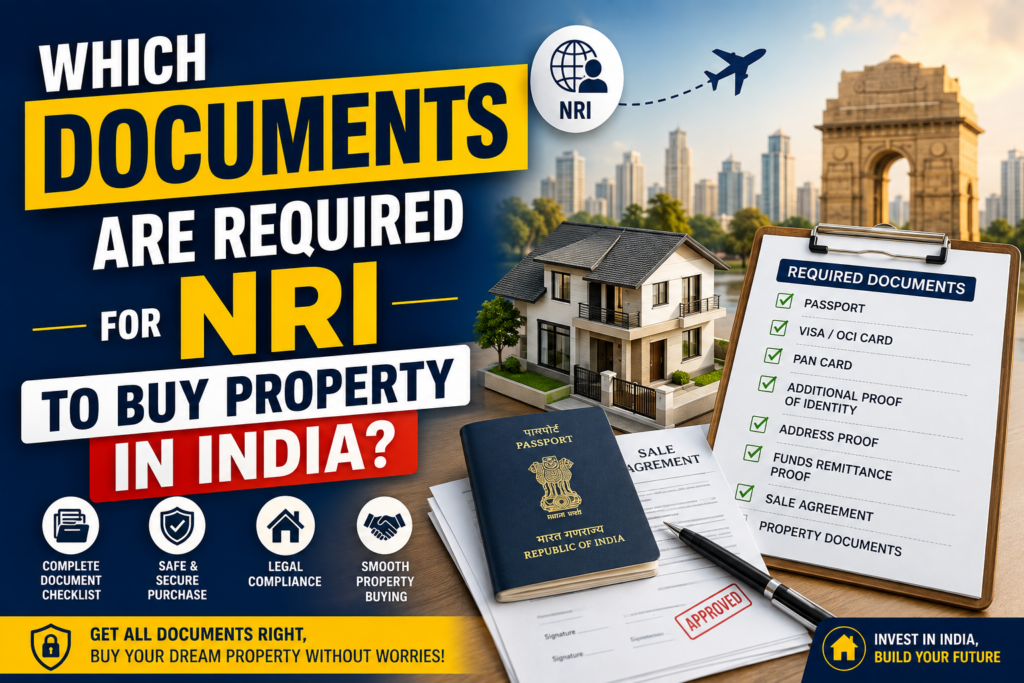
Buying Property in India as an NRI? Start with the Right Documents For many Non-Resident Indians (NRIs), owning a home in India is more than an investment; it is about staying connected to family, planning, or creating a retirement home. While buying property in India is legally permitted for most NRIs, the process involves documentation, financial compliance, and legal due diligence that can feel overwhelming when you are living abroad. A missing document, an overlooked legal verification, or a misunderstanding of tax requirements can delay your purchase or even create complications later. Fortunately, with proper planning and the right guidance, buying property in India can be a smooth and rewarding experience. This guide explains the documents you’ll need, how the buying process works, important tax considerations, and practical tips that help NRIs invest in Indian real estate with confidence. Table of Contents • Can NRIs Buy Property in India? • Documents Required for NRIs • How Do NRIs Buy Property in India? • Tax and Financial Considerations • Common Challenges NRIs Face • How Friends of NRI Can Help • Frequently Asked Questions • Conclusion Can NRIs Buy Property in India? Yes. Under the Foreign Exchange Management Act (FEMA), most NRIs and Overseas Citizens of India (OCI) cardholders can purchase residential and commercial property in India without prior approval from the Reserve Bank of India (RBI). However, there are restrictions on purchasing agricultural land, plantation property, and farmhouses unless permitted under applicable regulations. Before investing, always review the latest RBI and FEMA guidelines or consult a qualified legal professional to ensure compliance. What Documents Are Required for NRIs to Buy Property in India? Preparing your documents before starting the purchase process can help avoid unnecessary delays. 1. Valid Passport Your passport serves as your primary identity proof and confirms your NRI or OCI status. 2. Visa, Residence Permit, or OCI Card Banks, developers, and legal professionals may require proof of your overseas residential status. 3. PAN Card A Permanent Account Number (PAN) is generally required for property transactions, tax compliance, and financial documentation. 4. Overseas Address Proof Accepted documents may include: • Utility bill • Bank statement • Driving licence • Government-issued residence document 5. Passport-Sized Photographs These are commonly required during KYC verification and property registration. 6. Income Proof (If Applying for a Home Loan) Banks may request: • Salary slips • Employment certificate • Employment contract • Overseas bank statements • Income tax documents, where applicable 7. Property Documents Never purchase a property without verifying essential legal documents such as: • Title deed • Sale agreement • Encumbrance certificate • Approved building plan • Completion or occupancy certificate, where applicable Independent legal verification helps ensure the property has a clear title and complies with local regulations. How Do NRIs Buy Property in India? Buying property while living abroad has become much easier thanks to digital banking and online documentation. However, following a structured approach can help prevent costly mistakes. Step 1: Plan Your Budget Consider the property’s purchase price along with stamp duty, registration charges, taxes, maintenance costs, and financing requirements. Step 2: Shortlist the Right Property Research the location, builder’s reputation, connectivity, future development plans, and resale potential before deciding. Step 3: Verify the Legal Status Engage a qualified legal expert to verify ownership, approvals, and title documents before signing any agreement. Step 4: Arrange Financing If you require a home loan, compare lenders based on eligibility, repayment options, customer support, and overall borrowing experience instead of focusing only on interest rates. Step 5: Register the Property Once documentation and payments are complete, register the property with the relevant authority to establish legal ownership. Step 6: Preserve Important Records Maintain digital and physical copies of agreements, payment receipts, registration documents, and tax records for future reference. Is a Tax Receipt Required for an NRI to Purchase a House? There is no universal requirement for an NRI to submit a separate “tax receipt” before purchasing a property in India. However, property transactions may involve compliance with applicable tax laws, including Tax Deducted at Source (TDS), stamp duty, registration charges, and other statutory obligations. Since tax requirements depend on the property’s value and the nature of the transaction, it is advisable to consult a qualified tax professional before completing the purchase. Does an NRI Need an Aadhaar Card to Buy Property in India? No. An Aadhaar card is not mandatory solely for purchasing property in India. In most cases, NRIs can complete property transactions using: • Passport • PAN card • OCI card, where applicable • Overseas address proof However, certain banks or financial institutions may request Aadhaar for specific banking services if you already possess one. How Much Income Is Tax-Free for NRIs in India? NRIs are taxed differently from resident Indians. Your tax liability depends on factors such as: • Your residential status under Indian tax laws • The source of your income • The applicable financial year’s tax rules Generally, income earned outside India is not taxable in India if it does not accrue or arise in India. However, income generated within India, including rental income or capital gains from property, may be taxable. Tax regulations change periodically, so always consult a qualified tax advisor for guidance specific to your situation. What Are the Disadvantages of Being an NRI? While investing in Indian property offers long-term benefits, NRIs often encounter practical challenges. Managing Property from Abroad Regular inspections, maintenance, tenant management, and emergency repairs can be difficult without a trusted local representative. Documentation Delays Obtaining notarised or attested documents from overseas can extend transaction timelines. Legal Complexities Property laws vary across states, making professional legal verification essential before purchasing. Communication Challenges Coordinating with builders, banks, lawyers, and government offices across different time zones can slow down the buying process. Risk of Property Fraud NRIs are often more vulnerable to fraudulent transactions because they cannot physically monitor the property or verify documents regularly. These challenges can be managed effectively with proper planning and dependable local support.

How NRIs can claim inherited property in India
Blogs

How NRIs Can Claim Inherited Property in India (Legal Guide – 2026)

Inheriting property in India while living abroad can be both a blessing and a legal challenge. Many Non-Resident Indians (NRIs) struggle with documentation, legal procedures, ownership transfer, and compliance requirements. The good news is — NRIs can legally inherit property in India without restrictions, but the process must be handled correctly to avoid disputes, delays, or legal complications. This complete guide explains how NRIs can claim inherited property in India, step-by-step, with legal clarity. Can NRIs Inherit Property in India? Yes. NRIs, Persons of Indian Origin (PIOs), and Overseas Citizens of India (OCIs) are legally allowed to inherit property in India. NRIs can inherit: Residential property Commercial property Agricultural land (only through inheritance, not purchase) There are no restrictions on inheritance, provided the property was legally owned by the previous owner. What Types of Property Can NRIs Inherit? NRIs can inherit almost all types of property in India. Allowed Property Types Residential flats and houses Commercial buildings and shops Agricultural land (only via inheritance) Ancestral property Important: NRIs cannot purchase agricultural land directly, but inheritance is allowed under Indian law. Step-by-Step Process to Claim Inherited Property in India Step 1: Obtain the Death Certificate The first and most important document is the death certificate of the deceased property owner. It is required for: Ownership transfer Legal verification Mutation process This document must be issued by the local municipal authority in India. Step 2: Identify the Legal Heirs Ownership depends on whether the deceased left a Will. Case 1: Property with a Will Property is transferred according to the Will Beneficiary must prove authenticity Case 2: Property Without a Will (Intestate) Property is distributed as per Indian succession laws Legal heirs must be identified Succession Laws Applicable in India Different laws apply depending on religion: Hindu Succession Act – for Hindus, Sikhs, Jains, Buddhists Muslim Personal Law – for Muslims Indian Succession Act – for Christians and others Understanding applicable law is crucial for correct ownership distribution. Step 3: Obtain Legal Heir Certificate or Succession Certificate To claim inherited property, NRIs must obtain: Legal Heir Certificate (for basic ownership transfer)OR Succession Certificate (for financial assets and disputes) These documents establish rightful ownership. Step 4: Probate of Will (If Applicable) If a Will exists, probate may be required in certain cases. Probate is: Legal validation of the Will by a court Mandatory in cities like Mumbai, Chennai, and Kolkata Recommended for dispute-free ownership Step 5: Transfer Ownership (Mutation Process) Mutation is the process of updating property records in government records. This ensures: Property is legally recorded in your name You can sell or rent the property You can pay property tax Documents required: Death certificate Will or succession proof ID proof Property documents Step 6: Update Utility & Tax Records After mutation, update: Property tax records Electricity and water bills Society records This prevents future legal or financial issues. Do NRIs Need to Visit India to Claim Property? Not always. NRIs can manage the process remotely using: Power of Attorney (POA) Authorized representative in India POA Must Be: Notarized in your country of residence Attested by Indian Embassy/Consulate Registered in India This allows someone to act legally on your behalf. Take Control of Your Property in India From Anywhere in the World Managing property in India while living abroad shouldn’t be stressful or uncertain.Our professional Property Management Services in India, combined with end-to-end NRI services, are designed to give you complete peace of mind, transparency, and control — no matter where you live. From legal documentation and tenant management to maintenance, rent collection, and regular updates — we handle everything for you. Why NRIs Trust Our Services Dedicated on-ground team in India Complete NRI services under one roof Verified tenant handling & rent management Regular inspection with photo/video reports Transparent communication — no hidden costs Support tailored for NRIs in USA, UK, Canada & UAE We act as your local representative, ensuring your property is protected and performing. Stop Worrying About Your Property Back Home Whether your property is: Rented Vacant Newly inherited Or underutilized Our Property Management Services in India ensure it stays secure, maintained, and profitable. Tax Implications on Inherited Property for NRIs Is Inheritance Taxable in India? No. India does not have inheritance tax. However: Tax Applies When You: Sell the property → Capital gains tax Earn rental income → Income tax Capital Gains Tax for NRIs If you sell inherited property: Holding period is calculated from original owner’s purchase date Long-term capital gains (LTCG): 20% + surcharge + cess TDS applies on sale NRIs can also claim exemptions under certain conditions. Can NRIs Sell Inherited Property in India? Yes. NRIs can sell inherited property without restrictions. Requirements: Clear ownership documents PAN card TDS compliance Proper sale agreement Funds can be repatriated abroad under RBI guidelines. Common Challenges NRIs Face NRIs often encounter: Missing or incomplete documents Family disputes Illegal possession or encroachment Delayed mutation process Fraud risks These issues can delay ownership or reduce property value. How to Avoid Legal Problems To ensure smooth inheritance: Verify property title and ownership history Complete mutation as early as possible Keep all documents updated Avoid informal agreements Seek professional legal advice if needed Importance of Professional Assistance Handling inherited property remotely can be complex. Professional services help NRIs: Verify legal documents Complete ownership transfer Handle disputes Manage property after inheritance Ensure compliance with tax laws This ensures peace of mind and protects your asset. Frequently Asked Questions (FAQs) Can NRIs inherit agricultural land in India? Yes, but only through inheritance, not by purchase. Is probate mandatory for NRIs? Not always, but required in specific cities and cases. Can NRIs claim property without visiting India? Yes, through Power of Attorney. Is inherited property taxable in India? No inheritance tax, but tax applies on sale or rental income. Final Thoughts Understanding how NRIs can claim inherited property in India is essential to protect your rights and avoid legal complications. The process is straightforward when handled correctly — but small mistakes can lead

Scroll to Top
Call Now Button